


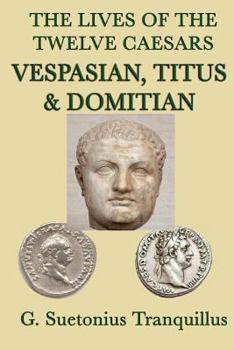
The Lives of the Twelve Caesars -Vespasian, Titus & Domitian-: Vespasian, Titus, and Domitian: Roman Imperial Biographies
(Part of the The Lives of the Twelve Caesars Series)

Suetonius' vivid biographies of Vespasian, Titus, and Domitian chronicle the rise and rule of the Flavian dynasty in the Roman Empire.
In this portion of The Lives of the Twelve Caesars, the Roman historian Suetonius turns to the emperors who restored stability to Rome after the turbulent civil wars of the first century. Vespasian, a seasoned general, rose to power during the chaos following the death of Nero and established the Flavian dynasty, bringing renewed order and discipline to the empire.
His son Titus, remembered for his generosity and popularity, presided over dramatic events including the eruption of Mount Vesuvius and the destruction of Pompeii. Despite a short reign, Titus earned a reputation as a compassionate and capable ruler.
Domitian, the younger son of Vespasian, ruled with a more authoritarian style. Suetonius describes both his administrative achievements and the atmosphere of suspicion and fear that eventually surrounded his court.
Written in the early second century, Suetonius' biographies combine historical narrative with revealing anecdotes about the character and habits of Rome's rulers. These accounts provide a compelling portrait of the Flavian emperors and their role in shaping the Roman Empire.
Customer Reviews
ThriftBooks® and the ThriftBooks® logo are registered trademarks of Thrift Books Global, LLC
