


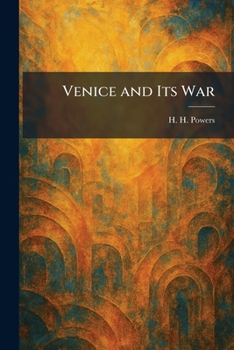
Venice and Its War

"Venice and Its War" by H. H. Powers offers a compelling and insightful exploration of the Venetian Republic's role and experience during the tumultuous years of the Great War. As an expert in art history and European culture, Powers examines how the unique geographic and cultural landscape of Venice shaped its strategic importance and its resilience under the pressures of modern conflict. The narrative delves into the city's struggle to protect its invaluable artistic treasures and architectural heritage from the threats of aerial bombardment and naval blockades, providing a vivid account of a city at the intersection of history and modernity.
Through a blend of historical analysis and keen observation, the work captures the spirit of Venice as it navigated the complexities of international diplomacy and military necessity. Powers highlights the city's enduring legacy and the profound impact of the war on its people and identity. Readers interested in Italian history, military strategy, and the preservation of culture will find "Venice and Its War" to be a significant contribution to the understanding of one of the world's most iconic cities during a pivotal moment in the twentieth century.
This work has been selected by scholars as being culturally important, and is part of the knowledge base of civilization as we know it. This work was reproduced from the original artifact, and remains as true to the original work as possible. Therefore, you may see the original copyright references, library stamps (as most of these works have been housed in our most important libraries around the world), and other notations in the work.
This work is in the public domain in the United States of America, and possibly other nations. Within the United States, you may freely copy and distribute this work, as no entity (individual or corporate) has a copyright on the body of the work.
As a reproduction of a historical artifact, this work may contain missing or blurred pages, poor pictures, errant marks, etc. Scholars believe, and we concur, that this work is important enough to be preserved, reproduced, and made generally available to the public. We appreciate your support of the preservation process, and thank you for being an important part of keeping this knowledge alive and relevant.
Customer Reviews
ThriftBooks ® and the ThriftBooks ® logo are registered trademarks of Thrift Books Global, LLC
