


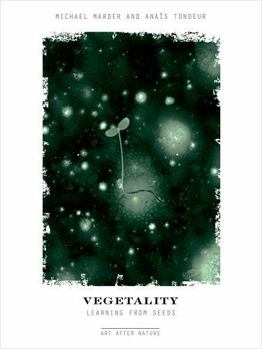
Vegetality: Learning from Seeds (Art After Nature)

How seeds enable new modes of human cognition and aesthetic sensibility
What if seeds could transform our understanding of life, time, and existence? Vegetality restages the quiet drama of dormancy, germination, and growth to show how plants challenge human ideas about beginnings, endings, and identity. By integrating philosophy, plant science, poetry, and artistic experimentation, Michael Marder and Ana s Tondeur invite readers to recalibrate their relationship with nature and with themselves.
From roadside morning glory to flax found in Chernobyl's exclusion zone, Vegetality follows real seeds across variegated landscapes and histories. The dispersal of these tiny travelers becomes a lens for exploring migration, resilience, and chance, connecting botanical life with urgent questions about displacement and belonging. Rather than model the currently predominant extractive and productivity-driven ways of acting, plants provide us with alternative paradigms for thinking about and sensing the world in the faint light of latency, patience, and open-ended becoming.
The book's experimental structure embodies the logic of its subject wherein origins and conclusions all meld into an ongoing relational and generative process of "starting from the middle." Through its collaborative interweaving of writing and images, Vegetality brings us the art of thinking and sensing the world from a vegetal (indeed, the seminal) perspective.
Retail e-book files for this title are screen-reader friendly with images accompanied by short alt text and/or extended descriptions.
Customer Reviews
ThriftBooks ® and the ThriftBooks ® logo are registered trademarks of Thrift Books Global, LLC
