


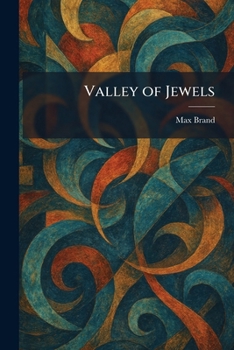
Valley of Jewels

Select Format
Select Condition 
Book Overview
"Valley of Jewels" is a high-stakes adventure set against the rugged backdrop of the American West, crafted by the legendary master of the genre, Max Brand. The narrative explores the trials of formidable men navigating a landscape where formal law is often distant and personal grit is the only currency that matters. Centered on a quest for hidden wealth and the treacherous path that leads to the fabled valley, the story delves into themes of loyalty, greed, and the untamed spirit of the frontier.
As with many of Brand's most enduring works, "Valley of Jewels" features vibrant characterizations and a fast-paced plot that captures the essence of early 20th-century frontier fiction. Readers are immersed in a world of outlaws and heroes, where every decision in the wilderness can mean the difference between life and death. This work remains a significant piece of Western literature, showcasing the author's unique ability to blend intense action with a deep understanding of human nature under pressure. It is an essential read for fans of classic adventure and those seeking a window into the mythic heart of the American wilderness.
This work has been selected by scholars as being culturally important, and is part of the knowledge base of civilization as we know it. This work was reproduced from the original artifact, and remains as true to the original work as possible. Therefore, you may see the original copyright references, library stamps (as most of these works have been housed in our most important libraries around the world), and other notations in the work.
This work is in the public domain in the United States of America, and possibly other nations. Within the United States, you may freely copy and distribute this work, as no entity (individual or corporate) has a copyright on the body of the work.
As a reproduction of a historical artifact, this work may contain missing or blurred pages, poor pictures, errant marks, etc. Scholars believe, and we concur, that this work is important enough to be preserved, reproduced, and made generally available to the public. We appreciate your support of the preservation process, and thank you for being an important part of keeping this knowledge alive and relevant.
Customer Reviews
ThriftBooks ® and the ThriftBooks ® logo are registered trademarks of Thrift Books Global, LLC
