


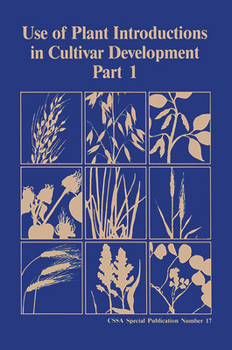
Use of Plant Introductions in Cultivar Development, Part 1
No Customer Reviews

Most consumers do not realize that if their diet involved only crops native to the USA, they would be limited to sunflowers, cranberries, blueberries, strawberries, tepary beans, Jerusalem artichokes, pecans, and a few other native crops. Immigrants usually brought seed with them; and the U.S. Government has always had a vigorous germplasm acquisition policy, administered first by the Patent Commissioner and later by the Department of Agriculture (USDA). In recent years the National Plant Germplasm System (NPGS) has been established by the Agricultural Research Service, USDA, in cooperation with state universities and the private sector. The mission of the NPGS is the acquisition, preservation, evaluation, and distribution of plant germplasm to research scientists. During the twentieth century, research scientists have been using this introduced plant germplasm to develop cultivars that are responsive to improved cultural practices, that have acceptable quality for food, feed, or fiber uses, and that have resistance to disease and insect pests and to environmental stresses. These plant breeding programs and the utilization of these improved cultivars by farmers have been so successful that the average U.S. family now only spends 13% of its income for food.
Format:Misc.
Language:English
ISBN:0891185968
ISBN13:9780891185963
Release Date:January 1
Publisher:Acsess
Customer Reviews
0 rating
Copyright © 2026 Thriftbooks.com
Terms of Use | Privacy Policy | Do Not Sell/Share My Personal Information | Cookie Policy | Cookie Preferences | Accessibility Statement
ThriftBooks ® and the ThriftBooks ® logo are registered trademarks of Thrift Books Global, LLC
ThriftBooks ® and the ThriftBooks ® logo are registered trademarks of Thrift Books Global, LLC
