


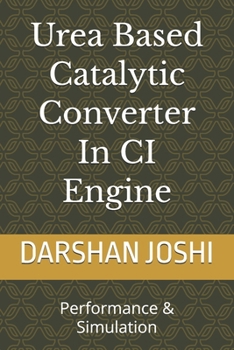
Urea Based Catalytic Converter In CI Engine: Performance & Simulation
No Customer Reviews

It sounds like you're working on a study or project related to urea-based catalytic converters (commonly used in diesel engines). Let me break this down clearly so you can build a solid understanding-or even structure a report or simulation work.
What You're Referring To
A urea-based catalytic converter is part of a system called Selective Catalytic Reduction (SCR), widely used in CI (Compression Ignition) engines, i.e., diesel engines.
It reduces harmful nitrogen oxides (NOx) emissions by injecting a urea solution (often called Diesel Exhaust Fluid (DEF)) into the exhaust.
Working PrincipleInjection of Urea SolutionDEF (32.5% urea + water) is sprayed into hot exhaust gases.Thermal Decomposition
Urea decomposes into ammonia (NH₃) and CO₂
(NH2)2CO→NH3+HNCO(NH_2)_2CO → NH_3 + HNCO(NH2)2CO→NH3+HNCO HNCO+H2O→NH3+CO2HNCO + H_2O → NH_3 + CO_2HNCO+H2O→NH3+CO2Catalytic ReactionAmmonia reacts with NOx over a catalyst:
4NO+4NH3+O2→4N2+6H2O4NO + 4NH_3 + O_2 → 4N_2 + 6H_2O4NO+4NH3+O2→4N2+6H2OResultHarmful NOx → harmless nitrogen (N₂) and water vaporPerformance Parameters to Study
When analyzing performance, focus on:
1. NOx Conversion EfficiencyPercentage reduction of NOxTypically 70-95% in well-optimized SCR systems2. Ammonia SlipExcess NH₃ leaving exhaust (undesirable)Controlled using ammonia slip catalysts3. Temperature WindowOptimal: 200 C - 450 CToo low → incomplete decompositionToo high → ammonia oxidation4. Urea Dosing RateCritical for efficiency vs emissions trade-off5. Pressure DropAffects engine backpressure and fuel efficiencySimulation Aspects
For simulation, researchers often use:
ANSYS FluentGT-PowerMATLAB / SimulinkKey Models in Simulation: Flow Dynamics (CFD)Exhaust gas velocity, turbulenceSpray ModelingUrea droplet size, evaporationChemical KineticsReaction rates of NOx reductionCatalyst ModelingSurface reactions and efficiencyTypical Simulation WorkflowGeometry creation (exhaust + SCR chamber)Mesh generationBoundary conditions: Exhaust temperatureFlow rateNOx concentrationUrea injection modelingReaction mechanism setupSolver executionPost-processing: NOx conversion plotsNH₃ sliptemperature distribution
Key ChallengesUrea crystallization at low temperaturesNon-uniform ammonia distributionCatalyst agingReal-time control of dosing
ApplicationsHeavy-duty trucksAgricultural enginesPower generatorsMarine diesel engines
Format:Paperback
Language:English
ISBN:B0GZC3RN4D
ISBN13:9798259477667
Release Date:April 2026
Publisher:Independently Published
Length:116 Pages
Weight:0.36 lbs.
Dimensions:0.2" x 6.0" x 9.0"
Customer Reviews
0 rating
Copyright © 2026 Thriftbooks.com
Terms of Use | Privacy Policy | Do Not Sell/Share My Personal Information | Cookie Policy | Cookie Preferences | Accessibility Statement
ThriftBooks ® and the ThriftBooks ® logo are registered trademarks of Thrift Books Global, LLC
ThriftBooks ® and the ThriftBooks ® logo are registered trademarks of Thrift Books Global, LLC
