


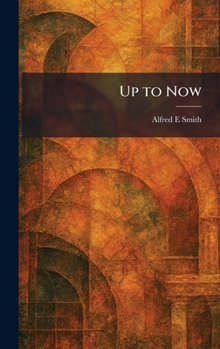
Up to Now

"Up to Now" is the compelling autobiography of Alfred E. Smith, one of the most influential figures in American politics during the early twentieth century. Written shortly after his historic 1928 presidential campaign, this memoir provides an intimate look at the life and career of the man who rose from the streets of Manhattan's Lower East Side to become a four-term Governor of New York and the first Roman Catholic presidential nominee of a major party.
In this work, Smith details his political evolution, from his early days associated with Tammany Hall to his transformative leadership in state government. He offers firsthand accounts of significant historical moments, including his advocacy for social welfare reforms, his stance against Prohibition, and the challenges he faced on the national stage. Through his narrative, readers gain insight into the legislative battles and public service philosophy that defined his "Happy Warrior" persona.
"Up to Now" serves as both a personal reflection and a vital historical record of a changing America. It captures the transition from nineteenth-century political machines to modern governance, making it an essential read for those interested in New York history, political science, and the narrative of the American dream.
This work has been selected by scholars as being culturally important, and is part of the knowledge base of civilization as we know it. This work was reproduced from the original artifact, and remains as true to the original work as possible. Therefore, you may see the original copyright references, library stamps (as most of these works have been housed in our most important libraries around the world), and other notations in the work.
This work is in the public domain in the United States of America, and possibly other nations. Within the United States, you may freely copy and distribute this work, as no entity (individual or corporate) has a copyright on the body of the work.
As a reproduction of a historical artifact, this work may contain missing or blurred pages, poor pictures, errant marks, etc. Scholars believe, and we concur, that this work is important enough to be preserved, reproduced, and made generally available to the public. We appreciate your support of the preservation process, and thank you for being an important part of keeping this knowledge alive and relevant.
Customer Reviews
ThriftBooks ® and the ThriftBooks ® logo are registered trademarks of Thrift Books Global, LLC
