


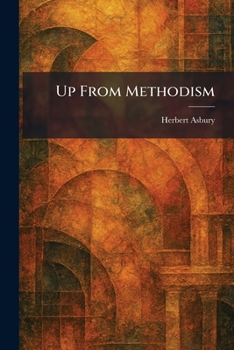
Up From Methodism

Select Format
Select Condition 
Book Overview
Through personal narratives and keen social observation, Asbury explores the themes of religious revivalism, moral rigidity, and the struggle for intellectual freedom against a backdrop of traditionalist values. Written during a period of significant cultural transition in the United States, the work reflects the 1920s spirit of skepticism and the intellectual movement away from the puritanical influences of the 19th century.
Asbury's prose captures the complexities of faith and identity, making "Up From Methodism" an important literary contribution to the study of American religion and social history. It serves as both a personal liberation story and a broader critique of the institutional structures that governed rural American society. This work remains a classic example of the early 20th-century memoir, blending journalistic detail with profound social commentary.
This work has been selected by scholars as being culturally important, and is part of the knowledge base of civilization as we know it. This work was reproduced from the original artifact, and remains as true to the original work as possible. Therefore, you may see the original copyright references, library stamps (as most of these works have been housed in our most important libraries around the world), and other notations in the work.
This work is in the public domain in the United States of America, and possibly other nations. Within the United States, you may freely copy and distribute this work, as no entity (individual or corporate) has a copyright on the body of the work.
As a reproduction of a historical artifact, this work may contain missing or blurred pages, poor pictures, errant marks, etc. Scholars believe, and we concur, that this work is important enough to be preserved, reproduced, and made generally available to the public. We appreciate your support of the preservation process, and thank you for being an important part of keeping this knowledge alive and relevant.
Customer Reviews
ThriftBooks ® and the ThriftBooks ® logo are registered trademarks of Thrift Books Global, LLC
