


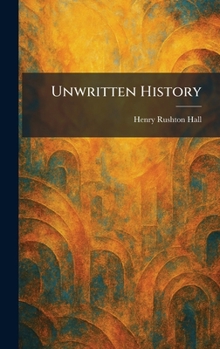
Unwritten History

"Unwritten History" offers a captivating journey into the deep past, exploring the vast spans of time before the advent of written records. Written by noted historian and archaeologist Henry Rushton Hall, this work illuminates the lives, struggles, and technological innovations of early humans. From the primitive flint tools of the Old Stone Age to the sophisticated metalworking of the Bronze and Iron Ages, the book provides a comprehensive overview of how humanity evolved and shaped its environment long before the first chronicles were ever penned.
Readers will discover the secrets of ancient dwellings, the development of early agriculture, and the artistic expressions found in prehistoric sites. Hall masterfully reconstructs the daily existence of our ancestors, bridging the gap between scientific discovery and accessible storytelling. By examining archaeological evidence and material remains, "Unwritten History" serves as an essential guide to understanding the foundation of human civilization. It remains a valuable resource for those curious about the prehistoric world and the silent testimony left behind by the peoples who lived through the dawn of mankind, providing a window into an era that is often overlooked in traditional historical narratives.
This work has been selected by scholars as being culturally important, and is part of the knowledge base of civilization as we know it. This work was reproduced from the original artifact, and remains as true to the original work as possible. Therefore, you may see the original copyright references, library stamps (as most of these works have been housed in our most important libraries around the world), and other notations in the work.
This work is in the public domain in the United States of America, and possibly other nations. Within the United States, you may freely copy and distribute this work, as no entity (individual or corporate) has a copyright on the body of the work.
As a reproduction of a historical artifact, this work may contain missing or blurred pages, poor pictures, errant marks, etc. Scholars believe, and we concur, that this work is important enough to be preserved, reproduced, and made generally available to the public. We appreciate your support of the preservation process, and thank you for being an important part of keeping this knowledge alive and relevant.
Customer Reviews
ThriftBooks ® and the ThriftBooks ® logo are registered trademarks of Thrift Books Global, LLC
