


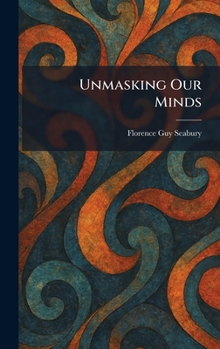
Unmasking Our Minds

"Unmasking Our Minds" is an insightful exploration of human psychology and the complex social dynamics that define the modern individual. Written by Florence Guy Seabury, this work delves into the psychological 'masks' that people adopt to navigate the varying expectations of society, family, and professional life. Seabury examines how these layers of persona often obscure the true self, leading to internal conflict and social misunderstanding.
Drawing on the psychological theories of the early 20th century, Seabury analyzes the impact of modern industrial civilization on the individual psyche. The book explores profound themes of self-discovery, social pressure, and the quest for authenticity in a rapidly changing world. By dissecting the motivations behind human behavior and the subconscious forces at play, Seabury provides readers with a roadmap for understanding their own mental processes and those of others. "Unmasking Our Minds" remains a significant contribution to the fields of social psychology and self-improvement, offering timeless observations on the human condition and the enduring struggle to reconcile the private self with public perception.
This work has been selected by scholars as being culturally important, and is part of the knowledge base of civilization as we know it. This work was reproduced from the original artifact, and remains as true to the original work as possible. Therefore, you may see the original copyright references, library stamps (as most of these works have been housed in our most important libraries around the world), and other notations in the work.
This work is in the public domain in the United States of America, and possibly other nations. Within the United States, you may freely copy and distribute this work, as no entity (individual or corporate) has a copyright on the body of the work.
As a reproduction of a historical artifact, this work may contain missing or blurred pages, poor pictures, errant marks, etc. Scholars believe, and we concur, that this work is important enough to be preserved, reproduced, and made generally available to the public. We appreciate your support of the preservation process, and thank you for being an important part of keeping this knowledge alive and relevant.
Customer Reviews
ThriftBooks ® and the ThriftBooks ® logo are registered trademarks of Thrift Books Global, LLC
