


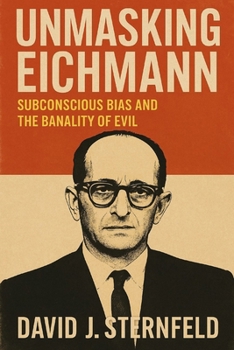
Unmasking Eichmann: Subconscious Bias and the Banality of Evil

Unmasking Eichmann: Subconscious Bias and the Banality of Evil
What drives an ordinary man to commit extraordinary evil?
Adolf Eichmann-the so-called architect of the Holocaust-claimed he was merely following orders. But was it simple obedience, or a deeper web of subconscious bias, ideology, and moral disengagement?
Unmasking Eichmann is a powerful blend of history, psychology, and ethics, exploring how totalitarian regimes turn ordinary individuals into instruments of mass destruction. Drawing on the lessons of Hannah Arendt's "banality of evil", it sheds light on how cultural forces and hidden prejudices shaped one of the most notorious figures of the 20th century.
Inside this book you'll discover:✅ The psychology of obedience, conformity, and moral disengagement
✅ How subconscious bias and social conditioning influence human behavior
✅ A fresh perspective on Eichmann's trial and Arendt's famous analysis
✅ What totalitarian regimes teach us about mass compliance and systemic evil
✅ Why ordinary people can become complicit in injustice-and how to prevent it
✔ Readers of Holocaust history and human rights studies
✔ Students of behavioral psychology, moral philosophy, and ethics
✔ Anyone seeking to understand social influence, bias, and complicity
By confronting the psychological and cultural roots of evil, this book empowers us to recognize injustice and resist blind obedience in today's world.
If you were captivated by Hannah Arendt's Eichmann in Jerusalem, The Lucifer Effect, or Ordinary Men, you will find Unmasking Eichmann an essential, thought-provoking read.
Customer Reviews
ThriftBooks ® and the ThriftBooks ® logo are registered trademarks of Thrift Books Global, LLC
