


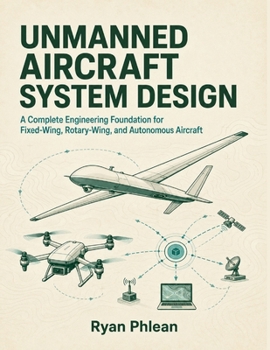
Unmanned Aircraft System Design

Every successful platform depends on hundreds of connected engineering decisions-from aerodynamics and propulsion to autonomous navigation, safety, and certification.
UNMANNED AIRCRAFT SYSTEM DESIGN gives you a structured engineering foundation for understanding how complete fixed-wing, rotary-wing, hybrid, and autonomous aircraft systems are conceived, analyzed, integrated, and tested.
Inside, you will learn how to:
Translate mission objectives into measurable design requirementsCompare fixed-wing, multirotor, helicopter, and hybrid configurationsEstimate weight, wing loading, power requirements, range, and enduranceSelect propulsion systems, batteries, propellers, rotors, structures, and materialsAnalyze aircraft stability, flight dynamics, and six-degree-of-freedom motionUnderstand PID control, autopilot architecture, guidance, and trajectory planningIntegrate sensors, avionics, GNSS/INS navigation, communications, and payloadsExplore autonomous path planning, obstacle avoidance, and GNSS-denied navigationApply systems engineering, verification, flight testing, reliability, and safety analysisExamine emerging technologies including drone swarms and electric vertical takeoff and landing aircraftOrganized across twenty-six comprehensive chapters, this unmanned aircraft systems textbook connects established aerospace principles with robotics, embedded control, and modern autonomous flight. It helps you see the aircraft, ground station, communication link, payload, and operator as parts of one integrated system.
Whether you are studying aerospace engineering, developing UAV technology, or strengthening your understanding of drone engineering, this book provides the connected foundation you need.
Start building a deeper, system-level understanding of unmanned aircraft-get your copy today.Customer Reviews
ThriftBooks ® and the ThriftBooks ® logo are registered trademarks of Thrift Books Global, LLC
