


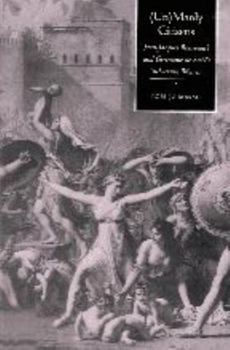
Unmanly Citizens: Jean-Jacques Rousseau's and Germaine de Stael's Subversive Women

Select Format
Select Condition 
Book Overview
Marso departs from previous feminist scholarship on Rousseau by reading Emile and La Nouvelle Heloise from the perspective of his women characters. In this reading, Sophie and Julie emerge as subversive of the narrow range of femininity usually understood as advocated by Rousseau. Tracing the words, gestures, and even the silence of the women characters in Rousseau's texts, Marso argues that these women display an uncanny ability to deconstruct the qualities and dictates of scholarship for which Rousseau is infamous.
Germaine de Stael builds on the perspective of Rousseau's women to uncover the radical potential of the feminine as a way to reconceptualize citizenship. Based on her experience of the French Revolution, Stael demonstrates the limits of establishing strict identities as prerequisites for citizen participation. In Stael's novels, Delphine and Corinne, Marso locates a citizenship practice premised on the recognition of individuals in terms of their concrete histories and situations. Marso's scholarship makes us aware of how early in the history of modern political thought the potential of an unmanly vision of citizenship as a radical critique of politics was already being discussed and formulated.
Customer Reviews
ThriftBooks® and the ThriftBooks® logo are registered trademarks of Thrift Books Global, LLC
