


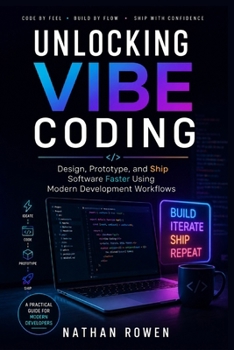
Unlocking vibe coding

AI is transforming how software is designed, developed, tested, and deployed. But generating code quickly is not the same as engineering reliable software. To turn AI-generated code into production-ready applications, developers need a disciplined approach to architecture, context management, quality assurance, security, and deployment.
AI Vibe Coding Operational Guide provides a practical, engineering-focused approach to building modern software with AI coding assistants and autonomous coding agents. It moves beyond basic prompting to examine how AI fits into the complete software development lifecycle, from initial requirements and system architecture to production deployment and ongoing operations.
Inside this guide, you will explore how to:
Design AI-Assisted Software Architectures: Translate business requirements into technical specifications, define service boundaries, establish API contracts, and maintain architectural consistency throughout development.
Master Development Prompt Engineering: Structure precise engineering prompts, manage project context, establish implementation constraints, and create reusable workflows for complex software projects.
Build Production-Ready Applications: Use AI to develop frontend interfaces, backend services, APIs, database integrations, authentication mechanisms, and distributed application components.
Improve Code Quality and Maintainability: Apply AI-assisted refactoring, identify code smells, manage dependencies, reduce technical debt, and preserve consistency across large codebases.
Engineer Reliable Testing Workflows: Generate and validate unit, integration, contract, regression, and end-to-end tests while incorporating performance testing and automated quality gates.
Secure AI-Generated Software: Apply threat modeling, vulnerability analysis, secret management, access control, dependency scanning, and secure code review practices.
Automate DevOps and Delivery: Integrate AI into version control, code reviews, continuous integration, infrastructure as code, containerization, Kubernetes, and cloud deployment pipelines.
Operate and Scale Applications: Implement observability, distributed tracing, performance optimization, fault tolerance, incident response, and production recovery strategies.
Coordinate AI Coding Agents: Develop structured workflows for multi-agent collaboration, manage shared engineering context, and establish appropriate human approval and governance controls.
Establish Enterprise-Grade Engineering Practices: Measure AI-assisted productivity, address licensing and intellectual property considerations, define production readiness criteria, and build sustainable AI-driven development processes.
Rather than relying on a single AI platform, the principles presented apply across evolving AI coding tools and agent-based development environments. The emphasis remains on transferable engineering methods, sound architectural decisions, repeatable workflows, and measurable software quality.
Who should read this book?
This guide is designed for software engineers, AI developers, technical leads, DevOps engineers, platform engineers, solution architects, enterprise architects, and IT consultants who want to incorporate AI into professional software development without compromising reliability, security, or maintainability.
Whether you are developing a new application, modernizing a legacy system, automating delivery pipelines, or introducing AI coding agents into an enterprise engineering team, this book provides a structured foundation for making AI-assisted development more effective and operationally dependable.
Move beyond code generation. Build an engineering workflow that delivers software you can test, secure, deploy, and maintain with confidence.
Customer Reviews
ThriftBooks ® and the ThriftBooks ® logo are registered trademarks of Thrift Books Global, LLC
