


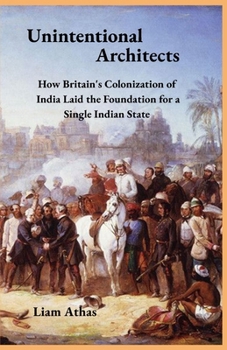
Unintentional Architects: How Britain's Colonization of India Laid the Foundation for a Single Indian State

India as a single nation, much like Germany or Italy, was a nonexistent state for the vast majority of the land's ten thousand year history. With a wealth of diverse cultures, ethnicities, languages, and kingdoms, even the very concept of a single Indian identity was one of fantasy. Yet after just two centuries of British colonial rule, India emerged independent on the world stage in 1947 as a single state with a common identity. This book answers why.
Unintentional Architects offers a broad yet nuanced exploration of the British Empire's complex legacy in India and its rule which shaped the infrastructure, identity, and institutions of the modern Indian state. Far from a one-sided tale of domination, Unintentional Architects traces how the machinery of colonial subjugation - railways, centralized administration, and an emerging sense of pan-Indian identity - laid the groundwork for an independent and unified India.
Through insightful analysis and richly detailed historical narrative, Unintentional Architects examines how Indian leaders, thinkers, and revolutionaries repurposed these colonial tools to craft a single sovereign state despite India's vast diversity. Neither a defense of empire nor a simplistic indictment, Unintentional Architects invites readers to grapple with the ironies of history and the resilience of a people who turned the instruments of control into the instruments of liberation.
Related Subjects
HistoryCustomer Reviews
ThriftBooks ® and the ThriftBooks ® logo are registered trademarks of Thrift Books Global, LLC
