


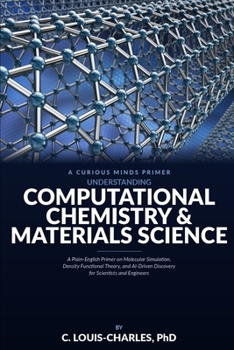
Understanding Computational Chemistry and Materials Science: A Plain-English Primer on Molecular Simulation, Density Functional Theory, and AI-Driven
No Customer Reviews

Computational chemistry has quietly become the engine behind modern chemical discovery, materials design, and molecular understanding. Yet for many chemists, the world of quantum calculations, molecular simulations, and high-performance computing still feels opaque, fragmented, or locked behind specialist jargon and software manuals. This book offers a clear, structured path into computational chemistry, turning complex theory and algorithms into a practical toolkit that working chemists, graduate students, and researchers can actually use.
Inside this book, readers will learn how to: Understand the core principles of quantum chemistry that underpin modern electronic structure methodsSelect appropriate levels of theory and basis sets for real-world molecular problemsBuild reliable molecular models and prepare input files for major computational chemistry packagesInterpret energies, geometries, spectra, and other outputs with chemical insight rather than black-box trustDesign molecular dynamics and Monte Carlo simulations that answer specific mechanistic questionsIntegrate computational results with experimental data to strengthen hypotheses and guide new experimentsOptimize workflows using scripting, automation, and high-performance computing resourcesAvoid common pitfalls in convergence, numerical stability, and misinterpretation of calculated propertiesApply computational tools across organic, inorganic, biological, and materials chemistry problemsAcross its chapters, the book walks through the full lifecycle of a computational chemistry project-from defining a chemically meaningful question, to choosing methods, setting up calculations, validating results, and communicating findings. Readers see how quantum mechanics, molecular mechanics, and statistical mechanics fit together, and how to move confidently between them when modeling reactions, noncovalent interactions, spectroscopy, or condensed-phase systems. The text emphasizes reproducible, transparent workflows: how to document choices, track parameters, and structure projects so that results can be revisited, extended, or shared with collaborators. Practical examples illustrate how to use widely available software and libraries without turning the book into a tool-specific manual, keeping the focus on transferable concepts and strategies. Whether you are a bench chemist looking to add predictive modeling to your toolbox, a graduate student preparing for research in theory and simulation, or a scientist in industry seeking to accelerate discovery with computation, this book provides a grounded, realistic roadmap. It shows how computational chemistry can move from occasional, mysterious calculations to a routine, reliable partner in everyday chemical thinking and decision-making.
Inside this book, readers will learn how to: Understand the core principles of quantum chemistry that underpin modern electronic structure methodsSelect appropriate levels of theory and basis sets for real-world molecular problemsBuild reliable molecular models and prepare input files for major computational chemistry packagesInterpret energies, geometries, spectra, and other outputs with chemical insight rather than black-box trustDesign molecular dynamics and Monte Carlo simulations that answer specific mechanistic questionsIntegrate computational results with experimental data to strengthen hypotheses and guide new experimentsOptimize workflows using scripting, automation, and high-performance computing resourcesAvoid common pitfalls in convergence, numerical stability, and misinterpretation of calculated propertiesApply computational tools across organic, inorganic, biological, and materials chemistry problemsAcross its chapters, the book walks through the full lifecycle of a computational chemistry project-from defining a chemically meaningful question, to choosing methods, setting up calculations, validating results, and communicating findings. Readers see how quantum mechanics, molecular mechanics, and statistical mechanics fit together, and how to move confidently between them when modeling reactions, noncovalent interactions, spectroscopy, or condensed-phase systems. The text emphasizes reproducible, transparent workflows: how to document choices, track parameters, and structure projects so that results can be revisited, extended, or shared with collaborators. Practical examples illustrate how to use widely available software and libraries without turning the book into a tool-specific manual, keeping the focus on transferable concepts and strategies. Whether you are a bench chemist looking to add predictive modeling to your toolbox, a graduate student preparing for research in theory and simulation, or a scientist in industry seeking to accelerate discovery with computation, this book provides a grounded, realistic roadmap. It shows how computational chemistry can move from occasional, mysterious calculations to a routine, reliable partner in everyday chemical thinking and decision-making.
Format:Paperback
Language:English
ISBN:B0H4LYSCH9
ISBN13:9798904981105
Release Date:June 2026
Publisher:Cybersoft Publishing LLC
Length:462 Pages
Weight:1.35 lbs.
Dimensions:0.9" x 6.0" x 9.0"
Customer Reviews
0 rating
Copyright © 2026 Thriftbooks.com
Terms of Use | Privacy Policy | Do Not Sell/Share My Personal Information | Cookie Policy | Cookie Preferences | Accessibility Statement
ThriftBooks ® and the ThriftBooks ® logo are registered trademarks of Thrift Books Global, LLC
ThriftBooks ® and the ThriftBooks ® logo are registered trademarks of Thrift Books Global, LLC
