


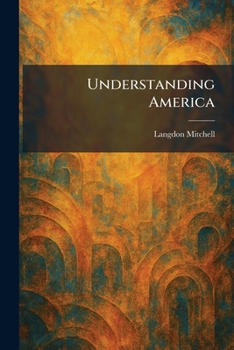
Understanding America

"Understanding America" is a compelling collection of essays by Langdon Mitchell that offers a profound examination of the American character and culture during the early twentieth century. Mitchell delves into the complexities of national identity, exploring the social, political, and educational landscape of a country in transition. Through a series of thoughtful reflections, the author probes the ideals of democracy and the evolving manners of the American people, seeking to define what truly constitutes the essence of the United States.
The book serves as both a social critique and a cultural study, addressing the challenges of maintaining a cohesive national spirit amidst rapid change. Mitchell's prose is insightful and evocative, capturing the nuances of a society grappling with its own growth and the demands of modernity. From the influence of European traditions to the distinctiveness of American institutions, "Understanding America" provides a historical perspective on the values and beliefs that have shaped the nation. It remains a significant work for those interested in the history of American thought, sociology, and the enduring quest for self-understanding in a democratic society.
This work has been selected by scholars as being culturally important, and is part of the knowledge base of civilization as we know it. This work was reproduced from the original artifact, and remains as true to the original work as possible. Therefore, you may see the original copyright references, library stamps (as most of these works have been housed in our most important libraries around the world), and other notations in the work.
This work is in the public domain in the United States of America, and possibly other nations. Within the United States, you may freely copy and distribute this work, as no entity (individual or corporate) has a copyright on the body of the work.
As a reproduction of a historical artifact, this work may contain missing or blurred pages, poor pictures, errant marks, etc. Scholars believe, and we concur, that this work is important enough to be preserved, reproduced, and made generally available to the public. We appreciate your support of the preservation process, and thank you for being an important part of keeping this knowledge alive and relevant.
Customer Reviews
ThriftBooks ® and the ThriftBooks ® logo are registered trademarks of Thrift Books Global, LLC
