




Book Overview
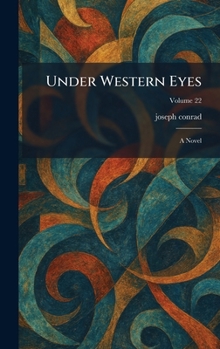
"Under Western Eyes" is a profound psychological and political novel by Joseph Conrad that explores the turbulent landscape of early 20th-century Russian revolutionary politics. The story follows Razumov, a diligent student in St. Petersburg who finds himself involuntarily entangled in the aftermath of a political assassination. Forced into a web of espionage, Razumov is sent to Geneva to spy on a group of revolutionary exiles, leading to a harrowing internal conflict between his conscience and his survival.
Conrad's masterpiece delves into themes of betrayal, guilt, and the vast cultural divide between the autocratic East and the democratic West. Through Razumov's eyes, readers are treated to a masterly examination of the human soul under extreme political pressure. The novel remains a seminal work of modern literature, renowned for its intricate character development and its chillingly accurate depiction of the paranoia and moral ambiguity inherent in radical political movements. "Under Western Eyes" is not only a gripping suspense story but also a timeless reflection on individual integrity and the tragic consequences of political upheaval.
This work has been selected by scholars as being culturally important, and is part of the knowledge base of civilization as we know it. This work was reproduced from the original artifact, and remains as true to the original work as possible. Therefore, you may see the original copyright references, library stamps (as most of these works have been housed in our most important libraries around the world), and other notations in the work.
This work is in the public domain in the United States of America, and possibly other nations. Within the United States, you may freely copy and distribute this work, as no entity (individual or corporate) has a copyright on the body of the work.
As a reproduction of a historical artifact, this work may contain missing or blurred pages, poor pictures, errant marks, etc. Scholars believe, and we concur, that this work is important enough to be preserved, reproduced, and made generally available to the public. We appreciate your support of the preservation process, and thank you for being an important part of keeping this knowledge alive and relevant.
Customer Reviews
To be(tray), or not to be...
The Greatest Russian Novel...
But each heart knows sorrow after its own kind
A dream and a fear
One of Conrad's best
ThriftBooks ® and the ThriftBooks ® logo are registered trademarks of Thrift Books Global, LLC
