


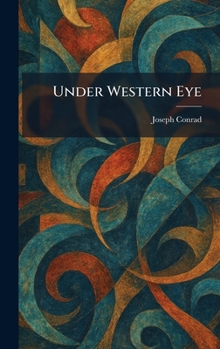
Under Western Eye

"Under Western Eyes" is a profound psychological and political novel by Joseph Conrad that delves into the turbulent atmosphere of early 20th-century Russia. Set against the backdrop of St. Petersburg and Geneva, the narrative follows Razumov, a quiet and hardworking student whose life is irrevocably changed when a fellow student seeks his help after assassinating a high-ranking government official. Caught between the demands of revolutionary fanatics and the oppressive reach of the tsarist secret police, Razumov becomes a man trapped by his own conscience and the complexities of political loyalty.
Through a narrative framed by an English teacher of languages, Conrad explores the deep cultural and ideological divide between the autocratic Russian state and the democratic ideals of the Western world. The work is a masterclass in the exploration of guilt, isolation, and the devastating consequences of betrayal. As Razumov is forced into a double life as a spy, the story examines the moral decay inherent in political extremism and the fragile nature of personal identity. A haunting study of the human condition, "Under Western Eyes" remains a cornerstone of literary fiction, offering a timeless critique of power and the individual's struggle for integrity in an age of upheaval.
This work has been selected by scholars as being culturally important, and is part of the knowledge base of civilization as we know it. This work was reproduced from the original artifact, and remains as true to the original work as possible. Therefore, you may see the original copyright references, library stamps (as most of these works have been housed in our most important libraries around the world), and other notations in the work.
This work is in the public domain in the United States of America, and possibly other nations. Within the United States, you may freely copy and distribute this work, as no entity (individual or corporate) has a copyright on the body of the work.
As a reproduction of a historical artifact, this work may contain missing or blurred pages, poor pictures, errant marks, etc. Scholars believe, and we concur, that this work is important enough to be preserved, reproduced, and made generally available to the public. We appreciate your support of the preservation process, and thank you for being an important part of keeping this knowledge alive and relevant.
Customer Reviews
ThriftBooks ® and the ThriftBooks ® logo are registered trademarks of Thrift Books Global, LLC
