


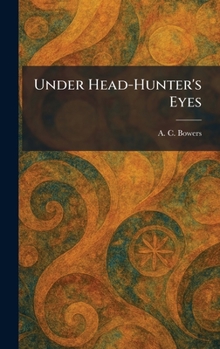
Under Head-Hunter's Eyes

"Under Head-Hunter's Eyes" is a compelling first-hand account of life and missionary labor in the remote regions of Northeast India during the early 20th century. Written by A. C. Bowers, the work provides a vivid portrayal of the cultures and customs of the indigenous tribes of Assam, including groups once feared for their practice of head-hunting.
The narrative follows the author's journeys through dense jungles and rugged hills, offering a unique perspective on the intersection of Western missionary efforts and traditional tribal societies. Beyond its religious focus, the book serves as a valuable ethnographic record, detailing the daily lives, social structures, and spiritual beliefs of communities that were largely isolated from the outside world. Bowers describes the challenges of navigating complex physical and cultural landscapes, as well as the profound transformations occurring within these hill tribes under the influence of new teachings and colonial administration.
Rich in historical detail and personal observation, "Under Head-Hunter's Eyes" captures a pivotal era in South Asian history. It remains an essential read for those interested in the history of Christian missions, South Asian ethnography, and the cultural heritage of the Northeast Indian frontier.
This work has been selected by scholars as being culturally important, and is part of the knowledge base of civilization as we know it. This work was reproduced from the original artifact, and remains as true to the original work as possible. Therefore, you may see the original copyright references, library stamps (as most of these works have been housed in our most important libraries around the world), and other notations in the work.
This work is in the public domain in the United States of America, and possibly other nations. Within the United States, you may freely copy and distribute this work, as no entity (individual or corporate) has a copyright on the body of the work.
As a reproduction of a historical artifact, this work may contain missing or blurred pages, poor pictures, errant marks, etc. Scholars believe, and we concur, that this work is important enough to be preserved, reproduced, and made generally available to the public. We appreciate your support of the preservation process, and thank you for being an important part of keeping this knowledge alive and relevant.
Customer Reviews
ThriftBooks ® and the ThriftBooks ® logo are registered trademarks of Thrift Books Global, LLC
