


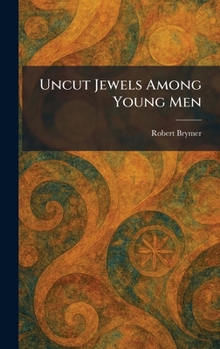
Uncut Jewels Among Young Men

"Uncut Jewels Among Young Men" is a compelling exploration of the moral and spiritual cultivation of youth during the early twentieth century. Written by Robert Brymer, this work serves as an earnest guide for the development of character, integrity, and social responsibility in young men. The author employs the metaphor of the "uncut jewel" to describe the latent potential within every individual, arguing that through proper mentorship, discipline, and the application of Christian principles, raw potential can be refined into a life of significant purpose and service.
The text delves into the social and personal challenges facing the younger generation of its time, providing reflections on faith, hard work, and ethical conduct. By emphasizing the importance of a strong moral framework, Brymer offers a vision for navigating the complexities of adulthood with honor. This work is not only a motivational resource but also a valuable historical document that reflects the ideals of masculinity and social reform prevalent in the 1920s. "Uncut Jewels Among Young Men" remains a testament to the enduring belief in the inherent value of youth and the transformative power of virtuous living.
This work has been selected by scholars as being culturally important, and is part of the knowledge base of civilization as we know it. This work was reproduced from the original artifact, and remains as true to the original work as possible. Therefore, you may see the original copyright references, library stamps (as most of these works have been housed in our most important libraries around the world), and other notations in the work.
This work is in the public domain in the United States of America, and possibly other nations. Within the United States, you may freely copy and distribute this work, as no entity (individual or corporate) has a copyright on the body of the work.
As a reproduction of a historical artifact, this work may contain missing or blurred pages, poor pictures, errant marks, etc. Scholars believe, and we concur, that this work is important enough to be preserved, reproduced, and made generally available to the public. We appreciate your support of the preservation process, and thank you for being an important part of keeping this knowledge alive and relevant.
Customer Reviews
ThriftBooks ® and the ThriftBooks ® logo are registered trademarks of Thrift Books Global, LLC
