


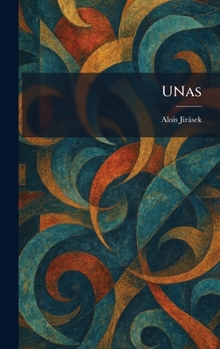
UNas

"UNas" is a monumental historical chronicle by the esteemed author Alois Jir sek, offering a rich and detailed tapestry of life in a small community during the mid-19th century. Set against a backdrop of profound cultural transformation, the work captures the spirit of the Czech National Revival, a period defined by a growing sense of national identity and cultural awakening. Through its expansive narrative, the book explores the intricate social dynamics of a rural setting, focusing on the lives of individuals who navigate the shifting tides of history, tradition, and societal change.
The novel is celebrated for its deep historical resonance and Jir sek's ability to breathe life into the past. By blending everyday struggles with broader social movements, "UNas" serves as both a compelling human drama and a significant literary achievement. It highlights the importance of heritage and the collective memory of a people striving for self-determination. Readers will find a masterful depiction of 19th-century provincial life, characterized by evocative descriptions and a profound empathy for its subjects. As one of Jir sek's most ambitious works, it remains a cornerstone of historical fiction, preserving the legacy of a nation's formative years and cultural spirit.
This work has been selected by scholars as being culturally important, and is part of the knowledge base of civilization as we know it. This work was reproduced from the original artifact, and remains as true to the original work as possible. Therefore, you may see the original copyright references, library stamps (as most of these works have been housed in our most important libraries around the world), and other notations in the work.
This work is in the public domain in the United States of America, and possibly other nations. Within the United States, you may freely copy and distribute this work, as no entity (individual or corporate) has a copyright on the body of the work.
As a reproduction of a historical artifact, this work may contain missing or blurred pages, poor pictures, errant marks, etc. Scholars believe, and we concur, that this work is important enough to be preserved, reproduced, and made generally available to the public. We appreciate your support of the preservation process, and thank you for being an important part of keeping this knowledge alive and relevant.
Customer Reviews
ThriftBooks ® and the ThriftBooks ® logo are registered trademarks of Thrift Books Global, LLC
