


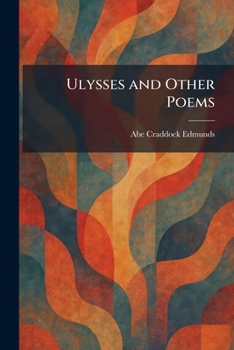
Ulysses and Other Poems

"Ulysses and Other Poems" is a compelling collection of early twentieth-century verse that showcases the lyrical prowess of Abe Craddock Edmunds. Centered around the titular figure of Ulysses, the collection explores themes of endurance, wandering, and the indomitable human spirit. Edmunds employs a classical sensibility to weave together poems that bridge the gap between ancient myth and modern reflection.
Beyond the primary narrative of the Greek hero, this anthology includes a variety of shorter works that delve into nature, emotion, and philosophical inquiry. The imagery is rich and evocative, characteristic of the literary movements of the 1920s. Readers will find a rhythmic elegance in these pages, as the author balances traditional forms with a distinct American perspective on the poetic tradition.
This collection stands as a notable example of Southern American poetry from the interwar period, offering insight into the stylistic transitions of the era. Whether revisiting the legend of Ithaca or contemplating the quiet moments of existence, "Ulysses and Other Poems" remains a testament to the enduring power of structured verse and the timeless appeal of the epic tradition.
This work has been selected by scholars as being culturally important, and is part of the knowledge base of civilization as we know it. This work was reproduced from the original artifact, and remains as true to the original work as possible. Therefore, you may see the original copyright references, library stamps (as most of these works have been housed in our most important libraries around the world), and other notations in the work.
This work is in the public domain in the United States of America, and possibly other nations. Within the United States, you may freely copy and distribute this work, as no entity (individual or corporate) has a copyright on the body of the work.
As a reproduction of a historical artifact, this work may contain missing or blurred pages, poor pictures, errant marks, etc. Scholars believe, and we concur, that this work is important enough to be preserved, reproduced, and made generally available to the public. We appreciate your support of the preservation process, and thank you for being an important part of keeping this knowledge alive and relevant.
Customer Reviews
ThriftBooks ® and the ThriftBooks ® logo are registered trademarks of Thrift Books Global, LLC
