


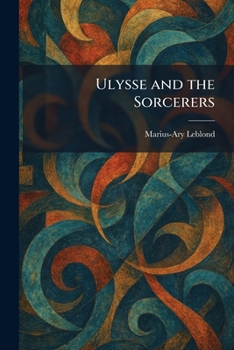
Ulysse and the Sorcerers

"Ulysse and the Sorcerers" is a compelling narrative that explores the complex intersection of colonial reality and ancient spiritual traditions in the Indian Ocean. Written by the celebrated duo Marius-Ary Leblond, the novel follows the life of Ulysse, a protagonist who navigates the social hierarchies and mystical undercurrents of early 20th-century R union. The work stands as a significant literary attempt to capture the interiority and cultural richness of the local population, moving beyond mere exoticism to delve into the psychological and spiritual depth of its characters.
Central to the story is the role of sorcery and traditional beliefs, which serve as both a source of power and a means of cultural preservation against the backdrop of colonial influence. Through Ulysse's eyes, readers are introduced to a world where the supernatural is woven into the fabric of everyday life, and where the struggle for personal identity is inseparable from the broader struggle for cultural recognition. "Ulysse and the Sorcerers" remains a vital piece of historical fiction, offering a vivid, atmospheric portrayal of a society in transition, marked by lyrical prose and a profound empathy for the human condition within the colonial framework.
This work has been selected by scholars as being culturally important, and is part of the knowledge base of civilization as we know it. This work was reproduced from the original artifact, and remains as true to the original work as possible. Therefore, you may see the original copyright references, library stamps (as most of these works have been housed in our most important libraries around the world), and other notations in the work.
This work is in the public domain in the United States of America, and possibly other nations. Within the United States, you may freely copy and distribute this work, as no entity (individual or corporate) has a copyright on the body of the work.
As a reproduction of a historical artifact, this work may contain missing or blurred pages, poor pictures, errant marks, etc. Scholars believe, and we concur, that this work is important enough to be preserved, reproduced, and made generally available to the public. We appreciate your support of the preservation process, and thank you for being an important part of keeping this knowledge alive and relevant.
Customer Reviews
ThriftBooks ® and the ThriftBooks ® logo are registered trademarks of Thrift Books Global, LLC
