


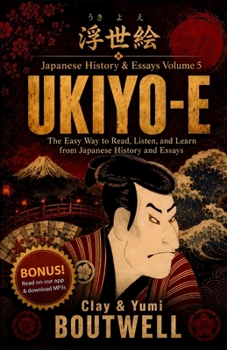
Ukiyo-e: The Easy Way to Read, Listen, and Learn from Japanese History and Stories
No Customer Reviews

Perfect for upper beginner and intermediate students of Japanese. This Japanese history reader contains three essays on ukiyo-e, Japan's most celebrated gift to the world of art.
Learn how "pictures of the floating world" were made, meet the masters who defined the form, and discover how their prints-arriving in Europe as packing material-set off a craze that reshaped Western painting.
Ukiyo-e Part I: How woodblock prints were made, and how one small mark (the kentō) brought them colorUkiyo-e Part II: The masters-Moronobu, Utamaro, Sharaku, Hiroshige, and HokusaiUkiyo-e Part III: How ukiyo-e reached Europe and transformed Western artYes, you can read real Japanese-even if you are fairly new to the language. Every essay is built so you're never stuck.
FEATURES:
Before You Read primers give you the historical background and grammar patterns to watch forEvery sentence is presented one per page with furigana on all kanji, a complete vocabulary list, and grammar explanationsGrammar spotlights, cultural notes, and maps of Japan appear right where you need themThe full essay in Japanese only (no gloss) lets you practice reading without interruptionReview & Practice: true-or-false, comprehension, particle, and translation exercises for every essay, with a complete answer keyKanji in Focus gives every key kanji its own page: stroke-order diagram, readings, component parts, and a memory hookAn English summary of each essay to check your understanding (Don't cheat Work through the Japanese first )FREE MP3 audio recorded by a professional native speaker at two speeds: natural pace and slow & clear-no sign-up requiredFREE Anki flashcard decks to master the vocabularyEvery sentence also lives in the Makoto+ Sentence Explorer-tap to hear audio, see word-by-word breakdowns, and quiz yourself on the web or in the free Makoto app for iOS and AndroidPDF and EPUB editions included at no extra costHiragana knowledge is required, and we recommend a solid understanding of basic Japanese grammar and sentence structure first. If a passage feels tough, the vocabulary notes, app, and Anki decks will get you through.
To your Japanese
Format:Paperback
Language:English
ISBN:1705592163
ISBN13:9781705592168
Release Date:November 2019
Publisher:Independently Published
Length:162 Pages
Weight:0.43 lbs.
Dimensions:0.3" x 5.5" x 8.5"
Customer Reviews
0 rating
Copyright © 2026 Thriftbooks.com
Terms of Use | Privacy Policy | Do Not Sell/Share My Personal Information | Cookie Policy | Cookie Preferences | Accessibility Statement
ThriftBooks ® and the ThriftBooks ® logo are registered trademarks of Thrift Books Global, LLC
ThriftBooks ® and the ThriftBooks ® logo are registered trademarks of Thrift Books Global, LLC
