


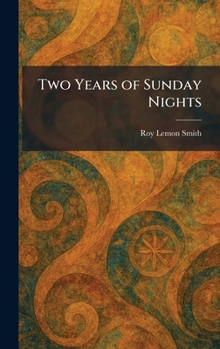
Two Years of Sunday Nights

"Two Years of Sunday Nights" is a compelling collection of addresses and reflections authored by Roy L. Smith, a prominent figure in 20th-century American Methodism. The work captures the essence of a series of evening services, offering readers a window into the spiritual and social concerns that shaped the Protestant landscape during the late 1920s and early 1930s.
Within these pages, Smith delivers practical wisdom and moral guidance aimed at the layperson, bridging the gap between theological doctrine and the realities of daily life. The collection is characterized by its accessible tone, engaging storytelling, and deep commitment to Christian fellowship. Covering a broad range of topics-from personal character and ethical living to the role of the church in a changing society-these Sunday night talks provide both a historical record of pastoral outreach and a timeless resource for spiritual reflection.
Ideal for students of homiletics, church history enthusiasts, or those seeking thoughtful Christian meditations, "Two Years of Sunday Nights" demonstrates the power of the spoken word in fostering community and faith. Smith's ability to connect with his audience through clear, relatable language makes this volume a significant contribution to religious literature.
This work has been selected by scholars as being culturally important, and is part of the knowledge base of civilization as we know it. This work was reproduced from the original artifact, and remains as true to the original work as possible. Therefore, you may see the original copyright references, library stamps (as most of these works have been housed in our most important libraries around the world), and other notations in the work.
This work is in the public domain in the United States of America, and possibly other nations. Within the United States, you may freely copy and distribute this work, as no entity (individual or corporate) has a copyright on the body of the work.
As a reproduction of a historical artifact, this work may contain missing or blurred pages, poor pictures, errant marks, etc. Scholars believe, and we concur, that this work is important enough to be preserved, reproduced, and made generally available to the public. We appreciate your support of the preservation process, and thank you for being an important part of keeping this knowledge alive and relevant.
Customer Reviews
ThriftBooks ® and the ThriftBooks ® logo are registered trademarks of Thrift Books Global, LLC
