


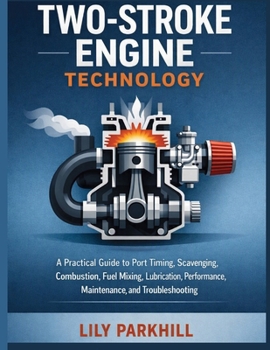
Two-Stroke Engine Technology: A Practical Guide to Port Timing, Scavenging, Combustion, Fuel Mixing, Lubrication, Performance, Maintenance, and Troubl

Ever wondered why a chainsaw and a Grand Prix race engine can share the same fundamental two-stroke architecture yet deliver dramatically different performance? Or why two engines with identical displacement can produce completely different power characteristics simply because of a few millimeters of difference in port height?
Two-Stroke Engine Technology answers these questions and many more. It takes you from the fundamentals of combustion and crankcase compression to advanced port timing, scavenging theory, exhaust tuning, and complete competition-engine development.
If you've ever looked inside a cylinder and wondered what all those openings actually do, or questioned why an engine pulls strongly through one part of the rev range before suddenly falling flat, this book was written for you.
What You'll LearnWhy port timing influences everything from idle quality to peak horsepowerHow scavenging actually works-and why more airflow does not always mean better performanceWhat creates broad, usable power delivery versus a narrow, aggressive powerbandHow combustion-chamber geometry affects thermal efficiency, combustion quality, and detonation riskWhy premix ratio matters and how to calculate fuel-to-oil mixtures accuratelyHow exhaust-pipe geometry uses pressure waves to improve cylinder filling and engine performanceWhat causes piston seizures and how to interpret the physical evidence left behindHow modern direct-injection systems and electronic engine controls are changing two-stroke technologyThis is not a book that skims across the surface before moving on. Each chapter builds on the previous one, connecting theory with practical procedures, diagnostic workflows, measurements, and real-world case studies from motocross, karting, marine, and utility applications.
You'll work through practical processes such as mapping port timing on a bench engine, tuning a carburetor from baseline settings, diagnosing abnormal combustion, analyzing piston and cylinder damage, reconstructing engine failures from physical evidence, and establishing a maintenance and documentation system that makes future troubleshooting faster and more reliable.
Whether you're a hobbyist trying to understand why your engine behaves the way it does, a technician looking to strengthen your diagnostic skills, or an engine builder pursuing measurable performance improvements through disciplined, evidence-based methods, this guide is designed to take you from understanding the principles to applying them confidently.
Inside, You'll Find26 in-depth chapters covering theory, practical procedures, tuning, diagnostics, and real-world applicationsClear explanations that make complex two-stroke concepts easier to understand without unnecessary jargonPractical diagnostic frameworks designed for use in the workshopCoverage ranging from handheld utility equipment to motorsport, karting, and marine enginesStep-by-step measurement and tuning proceduresEngine failure analysis and evidence-based troubleshootingPerformance-development principles for builders and techniciansA comprehensive reference section for quick consultationThe two-stroke engine may be mechanically compact, but its behavior is anything but simple. Every port, pressure wave, combustion event, clearance, and timing relationship contributes to the way an engine starts, responds, produces power, and survives under load.
Once you understand those relationships, engine behavior stops being a mystery.
Ready to understand what is really happening inside the engine every time you pull the cord, open the throttle, or push the engine toward its limits?
Let's get into it.
Customer Reviews
ThriftBooks ® and the ThriftBooks ® logo are registered trademarks of Thrift Books Global, LLC
