


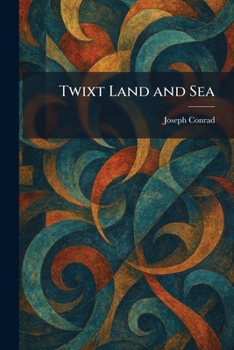
Twixt Land and Sea

"Twixt Land and Sea" is a compelling collection of three long stories by Joseph Conrad that explore the complex interface between the maritime world and the shores of the Indian Ocean and Malay Archipelago. In "A Smile of Fortune," a sea captain becomes entangled in a strange business arrangement and an even stranger domestic situation on a remote island. "The Sharer" is a masterpiece of psychological tension, following a young captain who hides a fugitive aboard his ship, leading to a profound internal conflict regarding law, morality, and his own identity. The final story, "Freya of the Seven Isles," is a tragic romance set against the backdrop of colonial rivalry and the treacherous waters of the East Indies.
Conrad's prose masterfully captures the isolation and moral ambiguity of life at sea. Each narrative delves into the human psyche, examining themes of betrayal and the thin line between civilization and the wild. With its vivid descriptions of the nautical life and the haunting beauty of the Eastern seas, "Twixt Land and Sea" stands as a significant contribution to early 20th-century literature and a testament to Joseph Conrad's unparalleled ability to blend adventure with deep philosophical inquiry.
This work has been selected by scholars as being culturally important, and is part of the knowledge base of civilization as we know it. This work was reproduced from the original artifact, and remains as true to the original work as possible. Therefore, you may see the original copyright references, library stamps (as most of these works have been housed in our most important libraries around the world), and other notations in the work.
This work is in the public domain in the United States of America, and possibly other nations. Within the United States, you may freely copy and distribute this work, as no entity (individual or corporate) has a copyright on the body of the work.
As a reproduction of a historical artifact, this work may contain missing or blurred pages, poor pictures, errant marks, etc. Scholars believe, and we concur, that this work is important enough to be preserved, reproduced, and made generally available to the public. We appreciate your support of the preservation process, and thank you for being an important part of keeping this knowledge alive and relevant.
Customer Reviews
ThriftBooks ® and the ThriftBooks ® logo are registered trademarks of Thrift Books Global, LLC
