


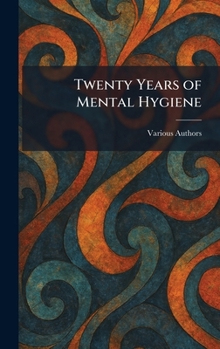
Twenty Years of Mental Hygiene

"Twenty Years of Mental Hygiene" is a significant historical retrospective that documents the first two decades of the organized mental hygiene movement in the early 20th century. This collection of essays and reports provides a vital window into a period of radical transformation in how society understood and addressed mental health. The work details the transition from traditional, often isolated psychiatric care toward a modern framework emphasizing early diagnosis, prevention, and the social determinants of mental well-being.
Within these pages, readers will find a synthesis of the progress achieved by practitioners, reformers, and public health advocates during a formative era. The text highlights the development of child guidance clinics, the reform of state hospital systems, and the burgeoning influence of psychological science on education, law, and social work. As a record of both scientific advancement and humanitarian reform, "Twenty Years of Mental Hygiene" serves as an essential resource for those interested in the history of medicine, the evolution of social policy, and the foundations of contemporary mental health advocacy.
This work has been selected by scholars as being culturally important, and is part of the knowledge base of civilization as we know it. This work was reproduced from the original artifact, and remains as true to the original work as possible. Therefore, you may see the original copyright references, library stamps (as most of these works have been housed in our most important libraries around the world), and other notations in the work.
This work is in the public domain in the United States of America, and possibly other nations. Within the United States, you may freely copy and distribute this work, as no entity (individual or corporate) has a copyright on the body of the work.
As a reproduction of a historical artifact, this work may contain missing or blurred pages, poor pictures, errant marks, etc. Scholars believe, and we concur, that this work is important enough to be preserved, reproduced, and made generally available to the public. We appreciate your support of the preservation process, and thank you for being an important part of keeping this knowledge alive and relevant.
Customer Reviews
ThriftBooks ® and the ThriftBooks ® logo are registered trademarks of Thrift Books Global, LLC
