


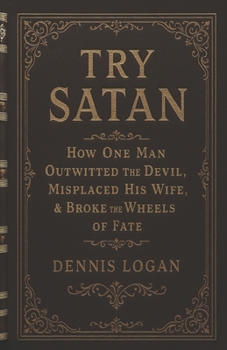
Try Satan: How One Man Outwitted the Devil, Misplaced His Wife, & Broke the Wheels of Fate

In 1877, Elijah Booker-born enslaved, educated by hardship, sharpened by observation-accepts an invitation no sensible man should entertain. A pale gentleman in a fine waistcoat offers him a test. Not of faith. Of results.
"You've tried God," the man says. "Now-try Satan."
What follows is a rise so improbable it borders on blasphemy.
A Black man inside banks, back rooms, and invisible offices where nations are nudged rather than ruled. A marriage conjured by coincidence too perfect to trust. And a quiet education in how power truly operates-not through chains or armies, but through stories people agree to live inside.
Presented as a found manuscript composed in 1877 and delivered more than a century later, Try Satan reads like a lost American gospel crossed with a confidence trick, a confession, and a jailbreak manual. Between chapters of narrative thunder are "instructions" whispered by the Devil himself-lessons on hope, fear, debt, reincarnation, and why oppressed people so often become the next wardens of the same old prison.
This is not a book about good versus evil.
It is about consent.
About the roles we inherit.
About the courage required to step out of the script entirely.
Philosophical, theatrical, and mythic in scale, Try Satan asks the dangerous question polite society avoids:
What if the Devil doesn't rule the world-
what if he just manages it until someone walks away?
Customer Reviews
ThriftBooks® and the ThriftBooks® logo are registered trademarks of Thrift Books Global, LLC
