


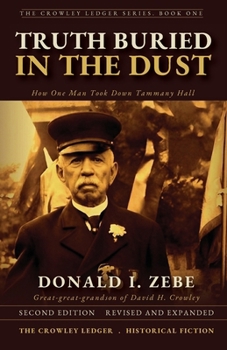
Truth Buried In The Dust: How One Man Took Down Tammany

Select Format
Select Condition 
Book Overview
He spent twenty years building the case against them. They needed one night to destroy him.
New York City, 1865. A nineteen-year-old Irish immigrant and Civil War veteran is handed a card above a Broadway pawnshop and recruited into a war the city will never officially admit exists - the fight against Tammany Hall's machine.
David H. Crowley spends the next twenty years building the case no one wants made. Naturalization fraud. Election theft. A six-hundred-arrest operation that becomes the largest coordinated election fraud bust in New York history. He documents all of it in a private ledger, even after he's handed a badge, a number, and a place inside the very institution the machine controls.
The machine waits. It always does.
In 1885, it moves - a staged introduction, a fabricated assault charge, witnesses who vanish before they can testify. Crowley is convicted on a lie everyone in the courtroom can see and no one will say aloud. He is sentenced to seventeen years at Sing Sing.
What happens next isn't a story about a wrongful conviction. It's a story about what survives one - and who has to carry it. For eight years, Crowley's wife Mary Agnes builds the case for his pardon at her kitchen table while raising the children who survive and burying the ones who don't. On Thanksgiving Day, 1893, the truth finally outruns the machine that buried it.
Based on the documented real life of the author's own great-great-grandfather - a man whose actual ledgers, found in a Bronx attic more than a century later, are the spine of this novel.
Customer Reviews
ThriftBooks ® and the ThriftBooks ® logo are registered trademarks of Thrift Books Global, LLC
