


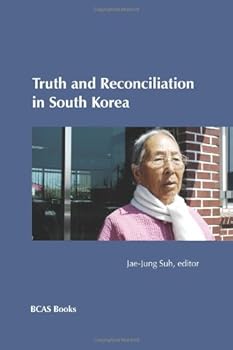
Truth and Reconciliation in South Korea: Between the Present and Future of the Korea Wars
No Customer Reviews

The Korean War is multiple wars. Not only is it a war that began on 25 June 1950, but it is also a conflict rooted in Korea's colonial experiences, postcolonial desires and frustrations, and interventions and partitions imposed by outsideforces. In South Korea, the war is a site of contestation: Which war should be rememberedand how should it be remembered? The site has been overwhelmed by the Manichean official discourse that pits evil communists against innocent Koreans, but the hegemonic project remains unfinished in the face of the resiliencyembodied in the survivors who have withstood multiple killings by the state. The historical significance of the Truth and Reconciliation Commission, Republic of Korea (TRCK), lies in its success in bringing back to life the voices ofthe silenced that complicate the hegemonic memory of the war as yugio, the "June 25th war." At the same time, the Commission embodies a structural dilemma: the effort to give voice to the silenced has turned to the state to redressthe state's wrongdoings. The TRCK as such stands on the problematic boundary between violence and post-violence, insecurity and security, exception and normalcy. Truth and reconciliation, and human security, are perhaps located in aprocess of defining and redefining the boundary. This edited volume explores such political struggles for the future reflected in the TRCK's work on the past war that is still present.
Format:Paperback
Language:English
ISBN:1480050962
ISBN13:9781480050969
Release Date:October 2012
Publisher:CreateSpace Independent Publishing Platform
Length:182 Pages
Weight:0.79 lbs.
Dimensions:9.0" x 0.4" x 6.0"
Customer Reviews
0 rating
Copyright © 2026 Thriftbooks.com Terms of Use
| Privacy Policy | Do Not
Sell/Share My Personal Information | Cookie Policy | Cookie Preferences | Accessibility Statement
ThriftBooks® and the ThriftBooks® logo are registered trademarks of Thrift Books Global, LLC
ThriftBooks® and the ThriftBooks® logo are registered trademarks of Thrift Books Global, LLC
