


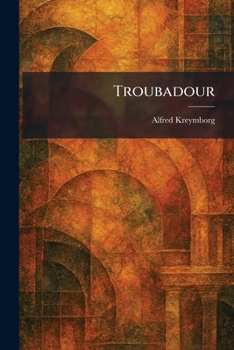
Troubadour

Select Format
Select Condition 
Book Overview
"Troubadour" is a vibrant and intimate autobiography by Alfred Kreymborg, a central figure in the American modernist movement. The work offers an immersive look into the evolving literary landscape of early 20th-century America, tracing Kreymborg's journey from his humble beginnings in New York City to his pivotal role as a poet, playwright, and editor. Through personal anecdotes and sharp observations, the narrative captures the spirit of the bohemian avant-garde, documenting the rise of influential magazines and the formation of creative circles that redefined artistic expression.
The book serves as a vital historical record of the "Others" group and the burgeoning Greenwich Village scene. Kreymborg shares his encounters with legendary figures of the era, providing unique insights into the lives and temperaments of his contemporaries. More than just a personal history, "Troubadour" explores the struggles and triumphs of an artist dedicated to fostering new voices and experimental forms. It remains an essential read for those interested in the history of American poetry, the development of modern drama, and the cultural shifts that shaped the modern era.
This work has been selected by scholars as being culturally important, and is part of the knowledge base of civilization as we know it. This work was reproduced from the original artifact, and remains as true to the original work as possible. Therefore, you may see the original copyright references, library stamps (as most of these works have been housed in our most important libraries around the world), and other notations in the work.
This work is in the public domain in the United States of America, and possibly other nations. Within the United States, you may freely copy and distribute this work, as no entity (individual or corporate) has a copyright on the body of the work.
As a reproduction of a historical artifact, this work may contain missing or blurred pages, poor pictures, errant marks, etc. Scholars believe, and we concur, that this work is important enough to be preserved, reproduced, and made generally available to the public. We appreciate your support of the preservation process, and thank you for being an important part of keeping this knowledge alive and relevant.
Customer Reviews
ThriftBooks ® and the ThriftBooks ® logo are registered trademarks of Thrift Books Global, LLC
