


All Formats & Editions
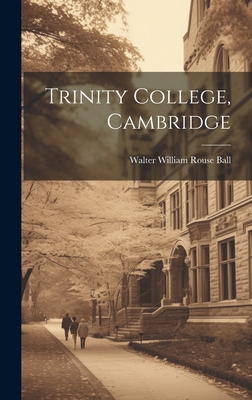
Trinity College, Cambridge
A fascinating historical exploration of one of the oldest and most prestigious universities in the world, Trinity College Cambridge is a must-read for anyone interested in the history of academia and British culture. Drawing on a wide range of sources, the author presents...
Trinity College, Cambridge (1906)
Trinity College, Cambridge (1906) is a detailed account of the history and architecture of one of the most prestigious colleges at the University of Cambridge. Written by Walter William Rouse Ball, a prominent mathematician and historian, the book provides a comprehensive overview...
Trinity College, Cambridge
Trinity College, Cambridge
Trinity College, Cambridge (1906)
Trinity College, Cambridge (1906) is a comprehensive book written by Walter William Rouse Ball, which provides a detailed account of the history, architecture, and notable figures associated with Trinity College, Cambridge. The book is divided into several sections, each of which...
Trinity College, Cambridge (1906)
Trinity College, Cambridge
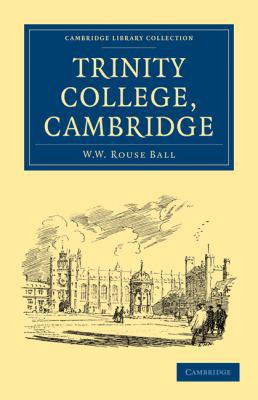
Trinity College, Cambridge
Trinity College was founded in 1546 by Henry VIII, who merged two older institutions, Michaelhouse and the King's Hall. The beauty of Trinity's courts attracts visitors from around the world, but the College is also a thriving, modern community. This history, published in 1906,...
Trinity College, Cambridge
Trinity College, Cambridge
This work has been selected by scholars as being culturally important, and is part of the knowledge base of civilization as we know it. This work is in the "public domain in the United States of America, and possibly other nations. Within the United States, you may freely...
Trinity College, Cambridge
A fascinating historical exploration of one of the oldest and most prestigious universities in the world, Trinity College Cambridge is a must-read for anyone interested in the history of academia and British culture. Drawing on a wide range of sources, the author presents...
Trinity College, Cambridge (1906)
Trinity College, Cambridge (1906) is a comprehensive book written by Walter William Rouse Ball, an English mathematician and historian. The book is a detailed account of the history, architecture, and notable figures associated with Trinity College, one of the oldest and most...
Trinity College, Cambridge
This work has been selected by scholars as being culturally important, and is part of the knowledge base of civilization as we know it. This work is in the "public domain in the United States of America, and possibly other nations. Within the United States, you may freely...
ThriftBooks ® and the ThriftBooks ® logo are registered trademarks of Thrift Books Global, LLC
