


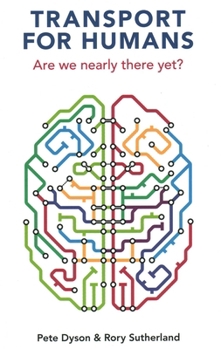
Transport for Humans: Are We Nearly There Yet?
No Customer Reviews

Engineers plan transport systems, people use them. But the ways in which an engineer measures success - speed, journey time, efficiency - are often not the way that passengers think about a good trip. We are not cargo. We choose how and when to travel, influenced not only by speed and time but by habit, status, comfort, variety - and many other factors that engineering equations don't capture at all. As we near the practical, physical limits of speed, capacity and punctuality, the greatest hope for a brighter future lies in adapting transport to more human wants and needs. Behavioural science has immense potential to improve the design of roads, railways, planes and pavements - as well as the ways in which we use them - but only when we embrace the messier reality of transport for humans. This is the moment. Climate change, the coronavirus pandemic and changing work-life priorities are shaking up long-held assumptions. There is a new way forward. This book maps out how to design transport for humans.
Format:Paperback
Language:English
ISBN:1913019357
ISBN13:9781913019358
Release Date:December 2021
Publisher:London School of Economics and Political Scie
Length:288 Pages
Weight:0.90 lbs.
Dimensions:0.6" x 5.5" x 8.5"
Customer Reviews
0 rating
Copyright © 2026 Thriftbooks.com Terms of Use
| Privacy Policy | Do Not
Sell/Share My Personal Information | Cookie Policy | Cookie Preferences | Accessibility Statement
ThriftBooks® and the ThriftBooks® logo are registered trademarks of Thrift Books Global, LLC
ThriftBooks® and the ThriftBooks® logo are registered trademarks of Thrift Books Global, LLC
