


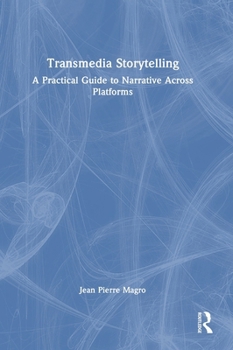
Transmedia Storytelling: A Practical Guide to Narrative Across Platforms

Transmedia Storytelling examines how successful stories move between platforms,
from traditional media to digital formats, and diagnoses how platform capitalism has
transformed transmedia storytelling from a democratic expansion of storyworlds into a
machinery of extraction.
Drawing on the author's dual expertise as both producer and academic, this book analyses
how storytellers create worlds that work successfully across multiple formats through
an abundance of case studies. These case studies span from Marvel and Stranger Things
to diverse global storytelling ecologies, including Japanese manga serialisation, Korean
platform co-productions, and Nollywood video-film networks. Readers will discover
practical tools for developing cross-platform stories, methods for creating effective story
bibles and world-building, techniques for adapting characters across different media, and
approaches to inclusive storytelling that acknowledge coherence as labour. The book
also confronts emerging challenges, including algorithmic personalisation that fragments
audiences into parallel monocultures, IP financialisation that transforms franchises
into liquid assets, and generative AI that automates the appearance of coherence while
degrading narrative causality.
This book provides essential reading for undergraduate and postgraduate students
undertaking digital storytelling, narrative theory, and film and media production, as well
as media studies classes. It also functions as a hands-on toolkit for industry professionals
already working within film, gaming, and content creation.
Customer Reviews
ThriftBooks ® and the ThriftBooks ® logo are registered trademarks of Thrift Books Global, LLC
