


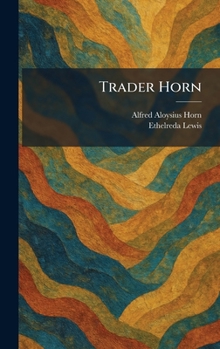
Trader Horn

"Trader Horn" is a captivating narrative of adventure and exploration, recounting the life of Alfred Aloysius Horn as an ivory trader in the river regions of Central Africa during the late nineteenth century. Based on the oral accounts shared by Horn with novelist Ethelreda Lewis, the work provides a vivid, first-hand glimpse into a world of dense jungles, tribal encounters, and the rugged realities of the colonial frontier.
The book blends memoir and travelogue, detailing Horn's experiences navigating the Ogowe River, his interactions with indigenous peoples, and his observations of the natural world and the shifting political landscape of the era. Rich in anecdote and historical texture, "Trader Horn" offers readers a unique perspective on the complexities of the ivory trade and the life of a Victorian-era adventurer. Its blend of high-stakes drama and reflective observation has made it a classic of African travel literature, preserving the voice of a man who witnessed the transformative changes of a continent during a period of intense global interest. This work remains a significant historical document and a compelling story of human resilience and curiosity in the face of the unknown.
This work has been selected by scholars as being culturally important, and is part of the knowledge base of civilization as we know it. This work was reproduced from the original artifact, and remains as true to the original work as possible. Therefore, you may see the original copyright references, library stamps (as most of these works have been housed in our most important libraries around the world), and other notations in the work.
This work is in the public domain in the United States of America, and possibly other nations. Within the United States, you may freely copy and distribute this work, as no entity (individual or corporate) has a copyright on the body of the work.
As a reproduction of a historical artifact, this work may contain missing or blurred pages, poor pictures, errant marks, etc. Scholars believe, and we concur, that this work is important enough to be preserved, reproduced, and made generally available to the public. We appreciate your support of the preservation process, and thank you for being an important part of keeping this knowledge alive and relevant.
Customer Reviews
ThriftBooks ® and the ThriftBooks ® logo are registered trademarks of Thrift Books Global, LLC
