


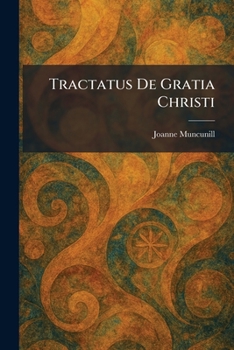
Tractatus De Gratia Christi

Select Format
Select Condition 
Book Overview
"Tractatus De Gratia Christi" is a comprehensive theological study exploring the complex Catholic doctrine of divine grace. Authored by Joanne Muncunill, this work provides a systematic examination of the relationship between God's grace and human freedom, addressing the nature, necessity, and various forms of grace. Drawing upon traditional scholastic methodologies and scriptural analysis, the text delves into the distinctions between sanctifying and actual grace, while articulating the merits of Christ in the economy of salvation.
The treatise is designed to provide clarity on dogmatic questions, making it a valuable resource for scholars, seminarians, and those engaged in the study of historical theology. By situating the discourse within the broader context of Catholic tradition, "Tractatus De Gratia Christi" offers a rigorous intellectual defense of orthodox teaching. This work remains a significant example of early 20th-century ecclesiastical scholarship, providing profound insights into the spiritual and doctrinal foundations of the Christian life. Through its detailed exposition, the book explores the transformative power of grace and its essential role in human redemption.
This work has been selected by scholars as being culturally important, and is part of the knowledge base of civilization as we know it. This work was reproduced from the original artifact, and remains as true to the original work as possible. Therefore, you may see the original copyright references, library stamps (as most of these works have been housed in our most important libraries around the world), and other notations in the work.
This work is in the public domain in the United States of America, and possibly other nations. Within the United States, you may freely copy and distribute this work, as no entity (individual or corporate) has a copyright on the body of the work.
As a reproduction of a historical artifact, this work may contain missing or blurred pages, poor pictures, errant marks, etc. Scholars believe, and we concur, that this work is important enough to be preserved, reproduced, and made generally available to the public. We appreciate your support of the preservation process, and thank you for being an important part of keeping this knowledge alive and relevant.
Customer Reviews
ThriftBooks ® and the ThriftBooks ® logo are registered trademarks of Thrift Books Global, LLC
