


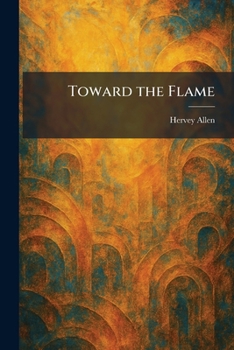
Toward the Flame

"Toward the Flame" is a powerful and unflinching first-hand account of the American experience on the Western Front during World War I. Written as a memoir of service in the 28th Division, the work follows a young lieutenant's journey through the harrowing landscapes of France in 1918. It provides a detailed and gritty look at the realities of modern warfare, moving beyond strategic overviews to capture the visceral experience of the individual soldier.
The narrative focuses on the grueling transition from training to the chaos of active combat, specifically detailing the push toward the Marne and the brutal intensity of the Meuse-Argonne offensive. Hervey Allen vividly depicts the physical exhaustion of forced marches, the psychological strain of constant bombardment, and the complex dynamics of leadership under fire. By documenting the day-to-day struggles and the profound humanity of his fellow soldiers, Allen creates a document that is both a historical record and a masterpiece of war literature. "Toward the Flame" remains an essential read for those seeking to understand the American military contribution to the Great War and the transformative impact of the battlefield on a generation of men.
This work has been selected by scholars as being culturally important, and is part of the knowledge base of civilization as we know it. This work was reproduced from the original artifact, and remains as true to the original work as possible. Therefore, you may see the original copyright references, library stamps (as most of these works have been housed in our most important libraries around the world), and other notations in the work.
This work is in the public domain in the United States of America, and possibly other nations. Within the United States, you may freely copy and distribute this work, as no entity (individual or corporate) has a copyright on the body of the work.
As a reproduction of a historical artifact, this work may contain missing or blurred pages, poor pictures, errant marks, etc. Scholars believe, and we concur, that this work is important enough to be preserved, reproduced, and made generally available to the public. We appreciate your support of the preservation process, and thank you for being an important part of keeping this knowledge alive and relevant.
Customer Reviews
ThriftBooks ® and the ThriftBooks ® logo are registered trademarks of Thrift Books Global, LLC
