




Book Overview
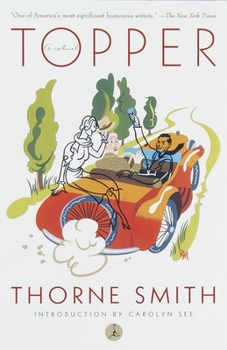
" Thorne Smith created the modern American ghost. A ghost with style and wit. A ghost that haunts us still." --The New York Times Thorne Smith is a master of urbane wit and sophisticated repartee. Topper, his best-known work, is the hilarious, ribald comedy on which the hit television show and movie (starring Cary Grant) were based. It all begins when Cosmo Topper, a law-abiding, mild-mannered bank manager, decides to buy a secondhand car, only to find it haunted by the ghosts of its previous owners--the reckless, feckless, frivolous couple who met their untimely demise when the car careened into an oak tree. The ghosts, George and Marion Kerby, make it their mission to rescue Topper from the drab "summer of suburban Sundays" that is his life--and they commence a series of madcap adventures that leave Topper, and anyone else who crosses their path, in a whirlwind of discomfiture and delight. As enchanting today as it was when first published in 1926, Topper has set the standard in American pop culture for such mischievous apparitions as those seen in The Ghost and Mrs. Muir, Heaven Can Wait, Beetlejuice, and Bewitched.
Format:Paperback
Language:English
ISBN:0375753052
ISBN13:9780375753053
Release Date:February 1999
Publisher:Modern Library
Length:240 Pages
Weight:0.68 lbs.
Dimensions:0.6" x 5.7" x 8.4"
Customer Reviews
5 ratings
better than the TV show
Published by Thriftbooks.com User , 21 years ago
and i very liked the show too !!. i remember seeing this book in the private collection of a professor at the university i worked at. so i took it home without his knowledge and read it. it was a very good read. light hearted but with a pleasant sadness.
Great escapist fare from the jazz age
Published by Thriftbooks.com User , 22 years ago
Having never heard of the movie, my initial attraction to this book was actually the cover art. Though there really isn't a date given, I pictured it perhaps in the early 1920's, though the depiction of the automobile as some kind of strange novelty probably sets it in the early 1910's. Perhaps it's a reflection on myself, but I enjoy stories about ordinary people who are stuck in a rut or who have lived their lives having never followed their dreams and who are given one last chance to shine. The characters and antics are outrageous, yet likable in a strange way. And the story reads pretty quickly.While reading this book, I pictured elements of the 20's, 50's, and 80's. In fact, I think they should re-make a movie of this book and set it in a "timeless" setting. Overall, if you're not prejudiced against reading a book written in the 1920's, I'd recommend it.
A Humour Standard
Published by Thriftbooks.com User , 23 years ago
'Topper' is best known perhaps from the Cary Grant movie version. It's a good movie but I like the book even better. The characters delight, particularly in terms of Cosmo's retaining his decorum, in the warmth of Marion's dead-but-still-sexy presence. Anyone who enjoys humourous novels has to put this one on their reading list. Few recent humour novels are as funny as this classic from decades past, but there is one I know of, entitled 'Rastus Reilly', and I recommend that book as well.
Terrific Jazz-era story, funny and thoughtful
Published by Thriftbooks.com User , 26 years ago
Who hasn't fallen in love with a ghost at least once in their life? Topper is absolutely delightful. While in some ways it was considered scandalous at the time, it certainly seems innocent today. It has a lightness and freshness lacking in his later works. Some contemporary readers may be unused to fiction that lacks violence and overt sex, but the appeal of this story is Cosmo's mid-life crisis and its sucessful resolution with the supernatural assistance of a carful of hard-drinking, carefree spirits.Whoever coined the phrase 'witty repartee' probably had this book in mind. It's a fun read that kept me entertained all the way from Seattle to Virginia.One word of advice before you start. Smith uses an interesting motif in this book over and over again. Keep your eyes open for it.
How a staid banker learns to really live from two ghosts.
Published by Thriftbooks.com User , 27 years ago
Topper is the delightfully riotious story of a staid, quietly frustrated banker who buys a fancy sports car haunted by it's previous owners, who died when they crashed it on their way home from a party. Since death did NOT part them, the two gang up on poor "Toppy", turning a good man bad the right way. He learns to drink to excess, lie to his wife, and blow his staid, "pillar of the community" reputation all to hell. Thorne Smith creates delightful characters with great depth and longing, and writes about them in a witty, incredibly insightful, and downright hilarious fashion. I've read all his books, and recommend them all highly, with "Night Life of the Gods" being my all-time favorite book. When you read Thorne Smith, you WILL laugh out loud! I highly recommend "Topper" to anyone who enjoys a good laugh, and a flock of cocktails!
Copyright © 2026 Thriftbooks.com
Terms of Use | Privacy Policy | Do Not Sell/Share My Personal Information | Cookie Notice | Cookie Preferences | Accessibility Statement
ThriftBooks ® and the ThriftBooks ® logo are registered trademarks of Thrift Books Global, LLC
ThriftBooks ® and the ThriftBooks ® logo are registered trademarks of Thrift Books Global, LLC
