


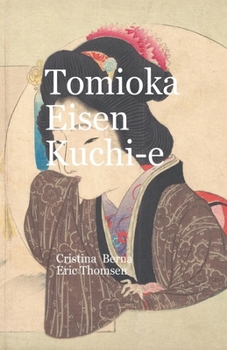
Tomioka Eisen Kuchi-e

Select Format
Select Condition 
Book Overview
Tomioka Eisen (April 28, 1864 - August 3, 1905) was a Japanese ukiyo-e Nihonga print artist famous for his kuchi-e prints intended for the frontispieces of books or to accompany the distribution of newspapers and magazines, which were very fashionable towards the end of the Meiji period. Due to his style he could be seen as associated with the sosaku hanga "creative prints" movement and a precursor for the later shin hanga "new prints" movement, although he was primarily occupied in the kuchi-e business.
It has been said that his prints were so popular that they had a direct effect on the sale of the kuchi-e issues that carried his prints.
Nihonga in the narrow sense refers to art based on traditional Japanese techniques and styles, such as calligraphy and hand-painted painting, rather than Western style oil painting called Yoga. Shin Hanga - "new prints"- was a Japanese art movement (c. 1915-1960) that revitalized traditional ukiyo-e woodblock techniques, combining them with Western influences like Impressionism, subtle light effects, and realistic depth. Initiated by publisher Watanabe Shozaburo (1885 - 1962), shin hanga focused on landscapes, beauty, and nature while using a traditional collaborative team (artist, carver, printer, publisher) to achieve high-quality results. When this movement started, Tomioka Eisen had already been dead 10 years
Customer Reviews
ThriftBooks ® and the ThriftBooks ® logo are registered trademarks of Thrift Books Global, LLC
