


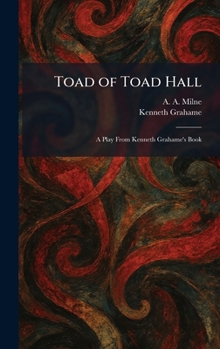
Toad of Toad Hall: A Play From Kenneth Grahame's Book

"Toad of Toad Hall" is a whimsical four-act play adapted by A. A. Milne from Kenneth Grahame's celebrated masterpiece, "The Wind in the Willows". This stage adaptation translates the pastoral charm and humor of the original novel into a lively theatrical experience, focusing on the exuberant and often troublesome adventures of the lovable Mr. Toad. Driven by his reckless passion for motor cars, Toad finds himself in a whirlwind of trouble, necessitating the intervention of his loyal friends-Rat, Mole, and the stern but kindly Badger.
The play brilliantly captures the distinct personalities of the riverbank inhabitants as they work together to rescue Toad from his legal follies and reclaim his ancestral home from the devious weasels and stoats. Through witty dialogue and engaging action, Milne emphasizes themes of camaraderie, forgiveness, and the importance of humility. "Toad of Toad Hall" stands as a remarkable collaboration between two giants of children's literature, offering a timeless exploration of English identity and the enduring power of friendship. It remains an essential work for those who cherish the magical world of Grahame's original vision and Milne's unique narrative flair.
This work has been selected by scholars as being culturally important, and is part of the knowledge base of civilization as we know it. This work was reproduced from the original artifact, and remains as true to the original work as possible. Therefore, you may see the original copyright references, library stamps (as most of these works have been housed in our most important libraries around the world), and other notations in the work.
This work is in the public domain in the United States of America, and possibly other nations. Within the United States, you may freely copy and distribute this work, as no entity (individual or corporate) has a copyright on the body of the work.
As a reproduction of a historical artifact, this work may contain missing or blurred pages, poor pictures, errant marks, etc. Scholars believe, and we concur, that this work is important enough to be preserved, reproduced, and made generally available to the public. We appreciate your support of the preservation process, and thank you for being an important part of keeping this knowledge alive and relevant.
Related Subjects
DramaCustomer Reviews
ThriftBooks ® and the ThriftBooks ® logo are registered trademarks of Thrift Books Global, LLC
