


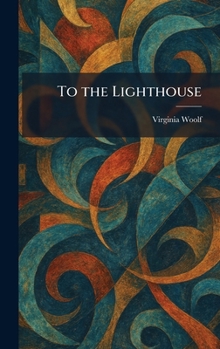
To the Lighthouse


Select Format
Select Condition 
Book Overview
"To the Lighthouse" is a landmark of modernist fiction that explores the complex psychological landscape of the Ramsay family and their guests during their summer visits to the Isle of Skye. Through Virginia Woolf's pioneering use of stream of consciousness, the narrative captures the internal monologues and shifting perceptions of its characters, moving beyond traditional plot structures to examine the depth of human experience.
The novel is divided into three distinct movements, centered around the elusive goal of a trip to a nearby lighthouse. In the first section, the presence of Mrs. Ramsay provides a stabilizing force for the household, while the middle section, "Time Passes," poignantly depicts the decay of the family home and the impact of the First World War. The final movement resolves long-standing emotional tensions as the survivors return to the coast to fulfill their long-delayed journey.
Rich with philosophical inquiry and poetic prose, "To the Lighthouse" investigates the subjectivity of time, the nature of art, and the challenges of interpersonal connection. It stands as a profound meditation on the fleetingness of life and the ways in which memory and creativity can preserve the essence of those who are gone.
This work has been selected by scholars as being culturally important, and is part of the knowledge base of civilization as we know it. This work was reproduced from the original artifact, and remains as true to the original work as possible. Therefore, you may see the original copyright references, library stamps (as most of these works have been housed in our most important libraries around the world), and other notations in the work.
This work is in the public domain in the United States of America, and possibly other nations. Within the United States, you may freely copy and distribute this work, as no entity (individual or corporate) has a copyright on the body of the work.
As a reproduction of a historical artifact, this work may contain missing or blurred pages, poor pictures, errant marks, etc. Scholars believe, and we concur, that this work is important enough to be preserved, reproduced, and made generally available to the public. We appreciate your support of the preservation process, and thank you for being an important part of keeping this knowledge alive and relevant.
Customer Reviews
Annotations
Nothing Else Quite Like it
Simply Brilliant - A Must Read
Reading and Re-Reading and
To the Lighthouse Mentions in Our Blog
As long as there have been books, there have been women writers, but until the last few centuries, their voices were marginalized, discounted, and even silenced. Finally, this is changing. In celebration of Women's History Month, here are 21 time-honored classics by women who broke new ground and earned their spot in literary history.

Spring may be around the corner, but these last few weeks of winter can feel endless. If you’re craving some warm weather and vitamin D, enjoy some virtual summer sun with one of these balmy, beachy books.
ThriftBooks® and the ThriftBooks® logo are registered trademarks of Thrift Books Global, LLC
