


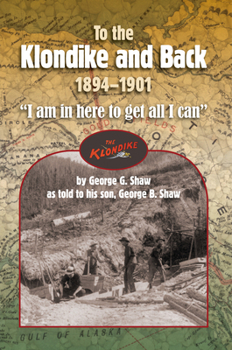
To the Klondike and Back (1894-1901): "I am in here to get all I can"

In 1894, 22-year-old George G. Shaw headed West from his family's farm in Vermont "young and with dreams". Neither work as a logger nor as a longshoreman in the Seattle area satisfied him. Having heard rumors that gold had been discovered up North, his uncle George suggested "Why don't you go to the Yukon and try it out?"
In 1896, in partnership with two other young fellows, he took a steamer to Juneau, Alaska, and over challenging terrain and treacherous waterways headed to where gold had been found - via Skagway, Dyea, Chilkoot Pass, Bennett Lake, and Dawson City; by steamer, on foot carrying their supplies on their back, and in the boat built with the hand operated sawmill they'd brought from Seattle.
We can hear about George G's adventures in his own words, because over the years, as his father reminisced, his son George B. took notes and then compiled them into a manuscript, which his daughter later transcribed.
We learn about the long hours, physical labor, skills, and ingenuity it took to work claims, and the strategies to deal with challenges we could barely imagine, including Shaw's solo track through remote Alaska and, when no passenger steamer would be available until spring, as one of 10 crew members on a small whaling ship caught in major storm. We can begin to imagine ourselves there in those times.
Customer Reviews
ThriftBooks® and the ThriftBooks® logo are registered trademarks of Thrift Books Global, LLC
