


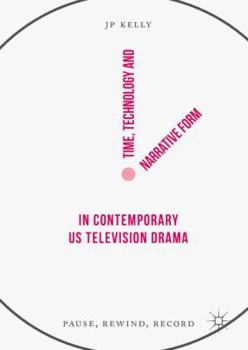
Time, Technology and Narrative Form in Contemporary Us Television Drama: Pause, Rewind, Record
No Customer Reviews

Select Format
Select Condition 
Book Overview
Offers a unique and detailed account of new narrative temporalities in television drama by adopting a model of "industrial poetics"
Argues that the emergence of new narrative temporalities means that TV drama should be approached through the lens of narrative time
Examines a wide range of narrative temporalities and key texts, including real-time (24), acceleration (Prison Break), non-linear time (Lost), prolepsis (FlashForward), and slowness and retrospection (Mad Men, Rubicon)
Situates US television programmes in a transnational context, and examines contemporary narrative form and the temporal regimes of an increasingly global industry
Format:Hardcover
Language:English
ISBN:3319631179
ISBN13:9783319631172
Release Date:October 2017
Publisher:Palgrave MacMillan
Length:279 Pages
Weight:1.37 lbs.
Dimensions:0.9" x 5.8" x 8.3"
Customer Reviews
0 rating
Copyright © 2026 Thriftbooks.com
Terms of Use | Privacy Policy | Do Not Sell/Share My Personal Information | Cookie Notice | Cookie Preferences | Accessibility Statement
ThriftBooks ® and the ThriftBooks ® logo are registered trademarks of Thrift Books Global, LLC
ThriftBooks ® and the ThriftBooks ® logo are registered trademarks of Thrift Books Global, LLC
