


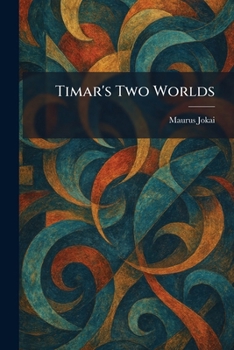
Timar's Two Worlds

"Timar's Two Worlds" is a masterpiece of Hungarian literature by Maurus Jokai, chronicling the dramatic life of Mih ly T -m r. The story follows T -m r, a humble riverboat captain on the Danube, whose fortunes are irrevocably changed when he comes into possession of a hidden treasure belonging to a fleeing Turkish pasha. This newfound wealth propels him into the highest echelons of society, where he becomes a successful businessman and marries the beautiful but distant T -mea.
However, despite his material success, T -m r finds himself trapped in a hollow existence, torn between his public duty and a private longing for true peace. His search for fulfillment leads him to a hidden sanctuary-an island on the Danube-where he discovers a simpler, more authentic life with the innocent No mi. Exploring themes of conscience, greed, and the duality of human nature, "Timar's Two Worlds" is a sweeping narrative that blends high-stakes adventure with profound psychological insight. Jokai's vivid descriptions of the river landscape and his nuanced characterizations make this a timeless exploration of the pursuit of happiness and the heavy price of deception. It remains a cornerstone of 19th-century European prose, offering a compelling look at the conflict between social obligation and personal desire.
This work has been selected by scholars as being culturally important, and is part of the knowledge base of civilization as we know it. This work was reproduced from the original artifact, and remains as true to the original work as possible. Therefore, you may see the original copyright references, library stamps (as most of these works have been housed in our most important libraries around the world), and other notations in the work.
This work is in the public domain in the United States of America, and possibly other nations. Within the United States, you may freely copy and distribute this work, as no entity (individual or corporate) has a copyright on the body of the work.
As a reproduction of a historical artifact, this work may contain missing or blurred pages, poor pictures, errant marks, etc. Scholars believe, and we concur, that this work is important enough to be preserved, reproduced, and made generally available to the public. We appreciate your support of the preservation process, and thank you for being an important part of keeping this knowledge alive and relevant.
Customer Reviews
ThriftBooks ® and the ThriftBooks ® logo are registered trademarks of Thrift Books Global, LLC
