


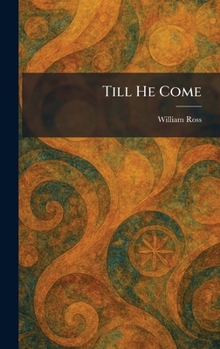
Till He Come

"Till He Come" is a profound exploration of Christian hope and the theological significance of the Second Coming of Christ. Drawing its title from the scriptural exhortation regarding the Lord's Supper, this work delves into the dual nature of Christian worship: a remembrance of the past sacrifice and an anticipation of the future return. William Ross examines the promises of the New Testament, offering a meditative and scholarly perspective on eschatology and the spiritual preparation required of the faithful.
The book serves as both a devotional guide and a theological treatise, aiming to strengthen the reader's faith through a deeper understanding of the "blessed hope." Ross's writing is characterized by its clarity and deep scriptural grounding, making complex theological concepts accessible to a broader audience. It explores themes of vigilance, the role of the Church in the world, and the ultimate consummation of the divine plan. "Till He Come" remains a significant contribution to early 20th-century religious literature, providing timeless insights into the heart of Christian belief and the enduring promise of the advent of Christ.
This work has been selected by scholars as being culturally important, and is part of the knowledge base of civilization as we know it. This work was reproduced from the original artifact, and remains as true to the original work as possible. Therefore, you may see the original copyright references, library stamps (as most of these works have been housed in our most important libraries around the world), and other notations in the work.
This work is in the public domain in the United States of America, and possibly other nations. Within the United States, you may freely copy and distribute this work, as no entity (individual or corporate) has a copyright on the body of the work.
As a reproduction of a historical artifact, this work may contain missing or blurred pages, poor pictures, errant marks, etc. Scholars believe, and we concur, that this work is important enough to be preserved, reproduced, and made generally available to the public. We appreciate your support of the preservation process, and thank you for being an important part of keeping this knowledge alive and relevant.
Customer Reviews
ThriftBooks ® and the ThriftBooks ® logo are registered trademarks of Thrift Books Global, LLC
