


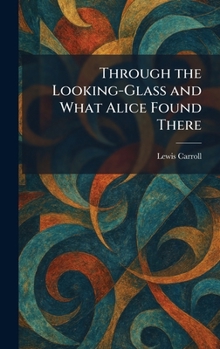
Through the Looking-Glass and What Alice Found There

"Through the Looking-Glass and What Alice Found There" is a seminal work of Victorian children's literature and a masterpiece of literary nonsense. Serving as the celebrated sequel to "Alice's Adventures in Wonderland," this tale follows young Alice as she steps through a mirror into a world where everything is reversed, much like a reflection. In this strange new realm, the landscape is laid out as a giant chessboard, and Alice must navigate her way through various squares to become a queen.
Along her journey, Alice encounters a host of eccentric and unforgettable characters, including the bickering Tweedledum and Tweedledee, the philosophical Humpty Dumpty, and the enigmatic White Knight. The narrative is enriched with iconic poems such as "Jabberwocky" and "The Walrus and the Carpenter," showcasing the author's extraordinary command of wordplay and logic. This work remains a profound exploration of childhood curiosity and the fluid nature of reality. It continues to captivate readers of all ages with its imaginative depth and satirical wit, solidifying its place as a cornerstone of the fantasy genre.
This work has been selected by scholars as being culturally important, and is part of the knowledge base of civilization as we know it. This work was reproduced from the original artifact, and remains as true to the original work as possible. Therefore, you may see the original copyright references, library stamps (as most of these works have been housed in our most important libraries around the world), and other notations in the work.
This work is in the public domain in the United States of America, and possibly other nations. Within the United States, you may freely copy and distribute this work, as no entity (individual or corporate) has a copyright on the body of the work.
As a reproduction of a historical artifact, this work may contain missing or blurred pages, poor pictures, errant marks, etc. Scholars believe, and we concur, that this work is important enough to be preserved, reproduced, and made generally available to the public. We appreciate your support of the preservation process, and thank you for being an important part of keeping this knowledge alive and relevant.
Customer Reviews
ThriftBooks ® and the ThriftBooks ® logo are registered trademarks of Thrift Books Global, LLC
