


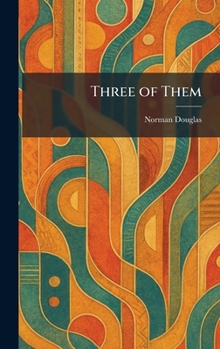
Three of Them

"Three of Them" is a compelling collection of works by the celebrated British author Norman Douglas, showcasing his remarkable versatility across the genres of travel writing, fiction, and scientific inquiry. This volume brings together three distinct pieces: "One Day," "Nerinda," and "On the Herpetology of the Grand Duchy of Baden," each representing a different facet of the author's intellectual life.
In "One Day," Douglas provides a vivid and erudite account of a day spent in Athens, blending personal observation with deep historical knowledge to capture the unique spirit of the Greek capital. "Nerinda" offers a stark contrast as a work of psychological fiction, delving into themes of obsession and mental decline with a haunting, atmospheric prose style. The collection is rounded out by Douglas's early scientific essay on the reptiles and amphibians of Baden, demonstrating the rigorous analytical mind that underpinned his literary talent. Together, these works illustrate the breadth of Douglas's career and his ability to master disparate subjects with sophistication and wit. "Three of Them" is an essential read for those interested in the diverse output of one of the 20th century's most distinctive prose stylists.
This work has been selected by scholars as being culturally important, and is part of the knowledge base of civilization as we know it. This work was reproduced from the original artifact, and remains as true to the original work as possible. Therefore, you may see the original copyright references, library stamps (as most of these works have been housed in our most important libraries around the world), and other notations in the work.
This work is in the public domain in the United States of America, and possibly other nations. Within the United States, you may freely copy and distribute this work, as no entity (individual or corporate) has a copyright on the body of the work.
As a reproduction of a historical artifact, this work may contain missing or blurred pages, poor pictures, errant marks, etc. Scholars believe, and we concur, that this work is important enough to be preserved, reproduced, and made generally available to the public. We appreciate your support of the preservation process, and thank you for being an important part of keeping this knowledge alive and relevant.
Customer Reviews
ThriftBooks ® and the ThriftBooks ® logo are registered trademarks of Thrift Books Global, LLC
