


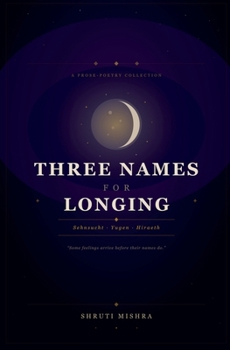
Three Names For Longing

Some feelings arrive before their names do. They settle into the body - a constriction in the chest when a familiar song plays in an unfamiliar city, the inexplicable grief of watching a door close on a room you will never enter again, the hunger that sharpens rather than diminishes when you are finally close to what you have wanted most.
This collection begins with three words that dare to name what English cannot.
Sehnsucht. German. The inconsolable longing in the human heart for a far, familiar, non-earthly land one can identify as one's home - a reaching toward something the heart recognises before the mind can catch up.
Yugen. Japanese. The profound awareness of the universe that triggers emotional responses too deep and mysterious for words - wonder arriving not as peace but as magnitude, as the strange intelligence of being undone.
Hiraeth. Welsh. A deep, inborn yearning for a home, a feeling, a place, or a person that may be beyond this plane entirely. Not nostalgia, which is merely sentimental. Hiraeth is structural - a missing built into the architecture of the self.
Three Names for Longing gathers sixty prose-poems written across different seasons of one life. They move through fragrance and seasons, desire and devotion, myth and memory, the body and the mind's long argument with it. There are two voices - a He and a She - whose exchanges are not transcriptions but portraits of what longing sounds like when it finally speaks aloud. There are poems built like love letters, like confessions, like questions asked too late and answered too soon.
This is not a book about unrequited love. It is a book about the experience of feeling intensely - which is its own country, with its own weather, its own customs, and its own particular brand of beautiful difficulty.
Written by an Indian woman living between worlds in Frankfurt, Germany, Three Names for Longing is the first collected edition of three companion manuscripts. It is a book for people who have loved beyond reason, waited beyond certainty, and still reached for language when silence would have been easier.
For airport waiting rooms and insomniac 3AMs. For the commute home when the music suddenly makes sense. For everyone who has ever thought: I don't have a word for this and meant it as both a problem and a relief.
Read it in any order. There is no wrong sequence for ache.
Customer Reviews
ThriftBooks ® and the ThriftBooks ® logo are registered trademarks of Thrift Books Global, LLC
